The Journey of Warren Buffett from a Curious Child in Omaha to the “Oracle of Omaha”

Have you ever wondered who is Warren Buffett? His journey began long before he became a financial legend. He started as a curious child fascinated by numbers, money, and simple business ideas. Over time, that curiosity evolved into one of the most remarkable investing careers in history, leading him to turn Berkshire Hathaway into a global powerhouse.

Through this article, you will explore key stages of his journey, his early life, Berkshire Hathaway’s success story, his investing strategy, personality, key achievements, philanthropy and the legacy he has built over decades.

How was Warren Buffett’s early life?

Before becoming the Oracle of Omaha, Warren Buffett was a boy who showed an early interest in numbers and business. Born in 1930 in Omaha, Nebraska, he grew up during the hardships of the Great Depression. He was the second of three children. Warren Buffett has one older sister, Doris Buffett, and one younger sister, Janet Buffett. His father, Howard Buffett, was a stockbroker who later became a US congressman, while his mother, Leila Buffett, played a key role in maintaining a supportive and stable household.

Speaking of early education, Warren Buffett attended school in Omaha and later in Washington, DC, after his father entered Congress. He stood out in his studies, particularly in math, showing a strong talent for numbers. However, his curiosity extended beyond the classroom. At a young age he read (One Thousand Ways to Make $1000), which sparked his interest in money and business. While most students focused on school subjects, Buffett became increasingly drawn to financial books and the study of markets.

Business and reinvestment was in Warrant’s genes since he was a little boy, he started early at 6 years old selling chewing gum and Coca Cola door to door, later reselling golf balls, delivering newspapers and as a teenager he bought a used pinball machine, placed it in a barbershop and turned it into a small money-making business by sharing the profits and reinvesting to grow.

At just 11 years old, Warren Buffett made his first stock investment, buying shares of Cities Service at around $38 each. He watched them fall to about $27 before eventually recovering, leading him to sell at a small profit of around $40. However, the stock later soared to over $200, teaching him a lifelong lesson about patience and the cost of selling strong investments too soon.

Later on, Warren Buffett pursued higher education with a clear focus on business. He began his studies at the University of Pennsylvania before transferring to the University of Nebraska–Lincoln, where he completed his bachelor’s degree in business. After graduating, he applied to the Harvard Business School but was not accepted. Although he was disappointed at first, but it turned out to be a blessing, as it led him to the Columbia Business where Benjamin Graham was his professor and mentor. This experience helped shape his resilience and independent thinking, qualities that later defined his investment approach.

Additional Information:

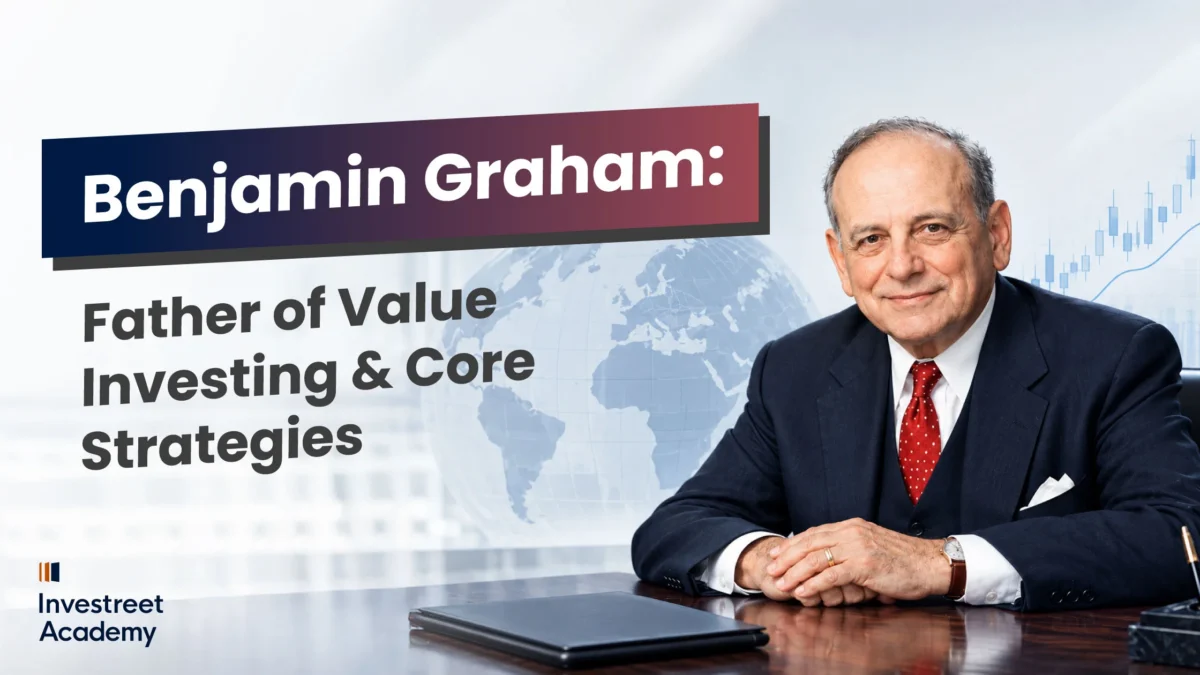
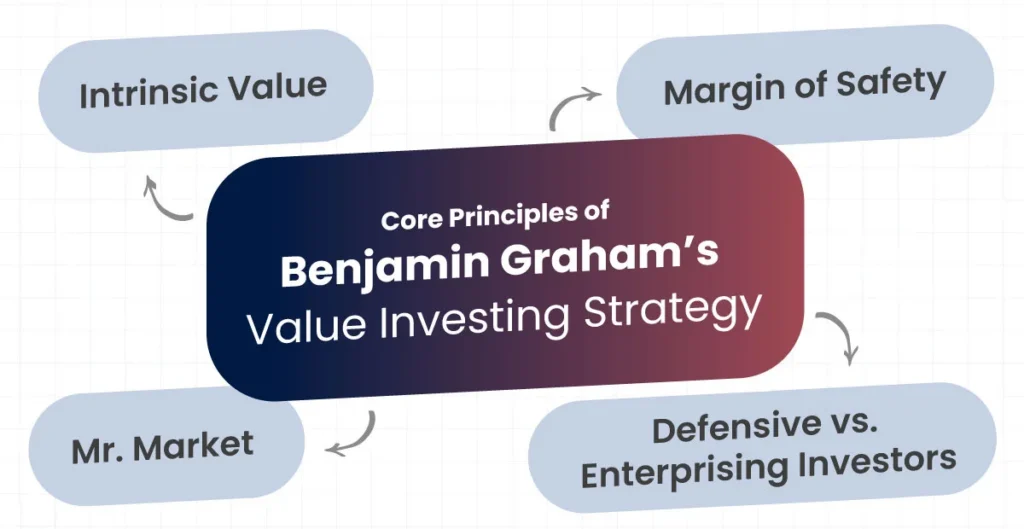
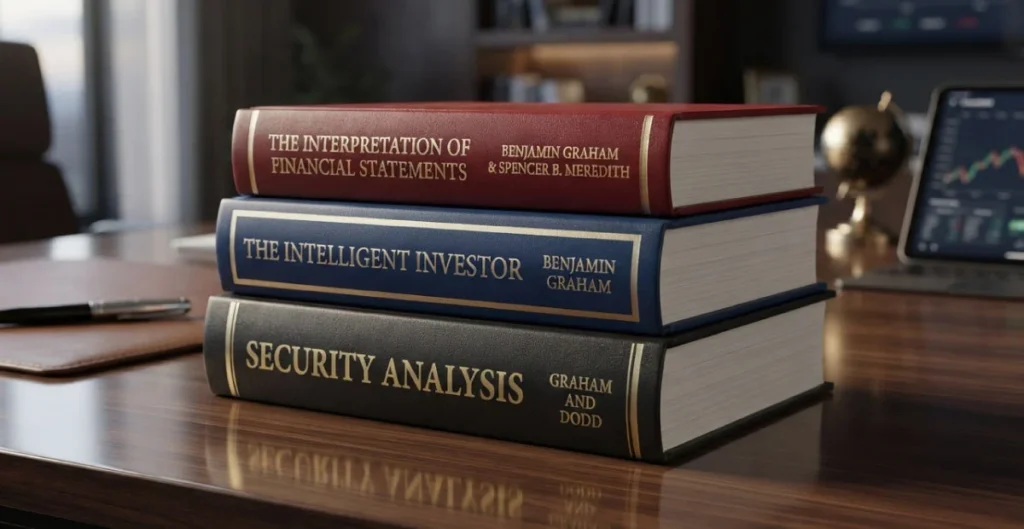
Benjamin Graham, often referred to as the “father of value investing,” significantly influenced Warren Buffett’s investment philosophy. Graham’s principles of value investing, which emphasize investing in undervalued companies with strong fundamentals, became the foundation of Buffett’s approach to investing. This experience helped shape Buffett’s resilience and independent thinking, qualities that later defined his successful investment strategy.

This foundation of curiosity, discipline and value-driven thinking eventually led Buffett toward a decision that would reshape both his life and Berkshire Hathaway itself. Let’s explore one of the most remarkable stories in investing history.

How a failing textile company became Warren Buffett’s greatest investment?

It all started with no intention of building a big empire or even managing a business. Warren Buffett back then was just a young investor seeking opportunities that others might ignore more like a bargain hunter for undervalued companies being sold for less than their true value. He had adopted his mentor Benjamin Graham’s approach which focused on buying something for less than it’s worth (intrinsic value) and waiting patiently for the market to recognize its real value. This mindset was far beyond what most investors were thinking at the time; while they focused on chasing short-term gains, Buffett looked for hidden value.

A hidden opportunity emerges

Also, no matter how underperforming or overlooked a business might be, it could still seem like a good catch for Warren Buffett under his strategy. This led to his encounter with the struggling textile company Berkshire Hathaway, which would later evolve into something far beyond what anyone could have imagined. At the time, however, the company’s performance was declining and it was barely surviving, which made it unattractive to most investors. For Buffett, though, it looked like a classic undervalued opportunity, and at the time a long-term takeover of the business was not his intention.

A broken deal sparked an unexpected shift

What seemed like a coincidence ultimately shifted the plan. A conflict with management over a share buyback price became a turning point in Warren Buffett’s career. Buffett had agreed to sell his shares in Berkshire, but management later offered a slightly lower price than initially promised, breaking their agreement. This left Buffett frustrated. However, instead of giving up and selling the shares, he made an unexpected move. He started buying even more shares. What was meant to be a small investment gradually evolved into taking control of the company.

Letting go of a failing industry

Once Buffett took over, he faced a harsh reality: “A bad business remains bad even with good management”. The textile industry was in decline and offered little promise for the company, while competition was intense, making profitability unlikely. So Buffett decided not to waste time trying to fix a failing business and instead reshaped Berkshire into something entirely different, more like an investment entity, aiming to better allocate capital towards better opportunities.

A game-changing acquisition in 1967

In 1967, Warren Buffett’s company made the decision to acquire the insurance company National Indemnity Company, and it proved to be a game changer. This gave him access to the concept of “float,” where insurance companies collect premiums upfront and pay claims later. The float generated a pool of capital that enabled Berkshire to invest in other growth opportunities over time. Over the years, this capital was used to invest in companies such as Coca-Cola, GEICO, and See’s Candies, which became major pillars of Berkshire’s success and financial strength.

The evolution of the investment strategy

Warren Buffett’s strategy evolved over time. He was initially influenced by Benjamin Graham, focusing on buying undervalued stocks with a margin of safety. Over time, and increasingly from the late 1960s onward, through his partnership and growing collaboration with Charlie Munger, he refined his approach to focus more on high-quality businesses with strong long-term advantages. Instead of buying only cheap companies, he began paying fair prices for great businesses and holding them for long-term compounding growth.

From textiles to a diversified investment empire

Although the original textile business faded, that did not lead to the disappearance of Berkshire Hathaway’s name. It survived by being restructured into something greater, operating across diversified sectors such as insurance, energy, railroads, and others. This transformation was driven by Warren Buffett’s smart strategy not only by stepping away from the failing sector, but also by continuously reinvesting profits into a strong portfolio of businesses, creating an efficient growth cycle. That’s what actually made his approach stand out.

Eventually, it was not luck that shaped the success of Berkshire Hathaway into one of the most valuable companies in the world but decades of patience, disciplined decision-making, smart reinvestment and capital allocation. What began as a simple search for another bargain deal became one of the most successful business stories, building a legacy of long-term compounding wealth.

After exploring how Berkshire Hathaway became a global success, let’s look deeper into the personality of Warren Buffett.

How was Warren Buffett Personality?

Warren Buffett’s personality does not only define who he is but also plays a key role in shaping his investment philosophy and business strategy over time.

  • Simple and humble: despite being one of the richest people in the world, he lives in a modest way, he enjoys simple routines and avoids unnecessary luxury. This reflects his belief that wealth should not change a person’s core habits.
  • High integrity: he is known for his honesty and clarity. He speaks in a straightforward way, avoids overcomplicating ideas and values transparency in business.
  • Independent thinker: rather than following random predictions, hypes, market trends and the mainstream opinions of the crowd. He relies on his own informed analysis and his deep understanding of the business and the circumstances.
  • Good emotional control: Buffett stays patient and emotionally composed especially during big uncertainties and when markets booms or crashes, so instead of making impulsive decisions, he remains cautious and waits for the right opportunities to act.
  • Strong learner: Buffett is a lifelong reader who reportedly spends about 5–6 hours a day reading books, newspapers, and annual financial reports. He believes better decisions stem from better understanding, not guesswork, and consistently seeks knowledge to improve his judgement.
  • Forward thinking: Warren Buffett had a long-term mindset; he focused on a business’s future value rather than short-term market movements or quick profits. He aimed to hold investments for many years so his returns could compound.

With his personality in mind, let’s look at Warren Buffett’s investing strategy in more detail. This strategy became the foundation of his success in investing and business.

What was Warren Buffett’s investing strategy?

At first glance, Warren Buffett’s investing strategy may seem simple, but the real challenge is having the patience and discipline to stick with it, something most investors struggle with.

While many investors chase trends, expect quick results, and lose patience before the power of compounding can take effect, Buffett took a very different approach.

So, let’s take a look at the strategy that helped him become one of the greatest investors in history.

Warren-Buffett's-investing-strategy

Buy businesses, not just stocks

Warren Buffett looks at stocks as real companies he could own, not just trading assets. He thinks like a business owner, focusing on how the company actually performs rather than short-term price movements.

Invest only in what you understand

If a business is too complicated, he simply avoids it. There’s no need to follow the crowd if you don’t have a solid prediction of how the business may perform.

Focus on long-term value, not short-term price moves

He cares more about what a company will be worth over decades than today’s price movements.

Look for strong, reliable companies

He prefers businesses with steady earnings, a good reputation and a clear advantage over competitors.

Have a margin of safety

Buy at a low or fair price. Even great companies are only worth buying if the price makes sense. Otherwise, buying at a high price can turn a good company into a bad investment.

Allow compounding to work in your favour

Warren Buffett believes time is one of the most powerful forces in investing, when you stay patient and leave your money to grow, your profits start earning their own profits.

Maintain emotional control

Stay patient, avoid chasing trends and don’t take an impulsive decision as a quick reaction to market noise, panic from news or crowd behaviour.

“Invest only in what you understand” is a key principle in Buffett’s strategy, which explains how he approached the tech boom through his circle of competence.

How did Warren Buffett approach the tech boom?

Warren Buffett approaches the tech boom through his “circle of competence,” investing only in businesses he fully understands. During the 1990s and early 2000s, while many investors rushed to buy technology stocks such as Microsoft, Amazon, and Google, Buffett chose not to follow the crowd. He stayed away because he believed tech companies change too quickly and are difficult to value over the long term. He focused instead on simple, stable businesses with predictable earnings.

His approach made sense during the early 2000s, when the dot-com bubble burst and many investors who had followed the hype suffered major losses. While others rushed into tech stocks and later fled during the crash, Buffett avoided the speculation, strengthening his reputation for disciplined, long-term investing. But surprisingly, he later entered the tech space, but only in companies like Apple that showed strong, consistent cash flows and fit his view of a reliable long-term business.

Warren Buffett’s investing strategy delivered remarkable long-term success in both investing and business. This is how he became widely known as the “Oracle of Omaha.”

Why was Buffett called the Oracle of Omaha?

By the early 1980s, Warren Buffett was widely known as the “Oracle of Omaha”. The nickname spread mainly through business media and financial press coverage.

“Oracle” is a metaphor for his exceptional financial judgment and highly successful long-term investment decisions, while “Omaha” refers to his hometown, where he began building his investment career.

The nickname became even stronger because his investment results were highly consistent over time, leading many people to view him as someone whose decisions were often proven right in the long run. This was not just about intelligence, but also his patience and long-term thinking which made his approach very effective.

He also chose to remain in Omaha rather than move to major financial centres such as New York, which made him stand out even more and strengthened the “Omaha” part of his nickname.

To this day, Warren Buffett continues to live in the same house in Omaha, Nebraska that he bought in 1958, and he has never moved to another city despite becoming one of the richest people in the world.

After knowing why Warren Buffett was famously named the “Oracle of Omaha,” let’s look at some of Warren Buffett’s most famous quotes.

What are some famous quotes by Warren Buffett?

If we look at Warren Buffett’s most famous quotes, we can clearly see how closely they align with his investment and business strategy. They reflect the principles behind his long-term success.

  • “Price is what you pay. Value is what you get.”

 (The focus should be on what something is truly worth, not just its cost)

  • “Be fearful when others are greedy and greedy when others are fearful.”

(The best opportunities come when you go against the crowd, buy at a low price when others are selling out of fear, and be cautious when everyone is overly confident.)

  • “The stock market is designed to transfer money from the Active to the Patient.”

(People who trade too often, and act quickly usually lose money, while those who stay patient and hold their investments over time are more likely to gain.)

  • “Risk comes from not knowing what you’re doing.”

(Lack of knowledge is the biggest source of investing mistakes.)

  • “It’s far better to buy a wonderful company at a fair price than a fair company at a wonderful price.”

(Quality matters more than low price, it’s better to invest in a high-quality company even if it’s not very cheap, rather than buying a weak company just because it looks like a great deal.)

  • Only buy something that you’d be perfectly happy to hold if the market shut down for 10 years.”

(Only invest in things you truly believe in, so you would feel comfortable holding them for a long time without needing to sell, this reflects a long-term thinking mindset)

  • “Someone is sitting in the shade today because someone planted a tree a long time ago.”

(The success we enjoy today comes from actions taken in the past, showing the importance of patience and long-term thinking.)

Warren Buffett’s wealth is not just a number; it is the result of patience, discipline, and decades of compounding, making it one of the most remarkable financial journeys in history. Let’s take a closer look.

What is Warren Buffett’s wealth and how did it grow?

One of the most powerful lessons from Warren Buffett’s wealth is how it grew over time. Most of his fortune was built after the age of 50, showing that true wealth is not created quickly but through patience, discipline and long-term compounding.

His wealth stems from value investing, buying strong companies at fair or undervalued prices. He avoids speculation and focuses on businesses with strong fundamentals and long-term potential.

Net worth and global ranking:

Warren Buffett has an estimated net worth of around $140–$150 billion, consistently ranking him among the world’s top 10 richest people. His wealth fluctuates daily with the market value of Berkshire Hathaway shares, which make up most of his fortune.

The source of wealth:

His wealth is largely tied to his ownership stake in Berkshire Hathaway, which holds a concentrated portfolio of high-quality public companies such as Apple, Coca-Cola, American Express, Bank of America and Chevron.

Alongside these investments, Berkshire fully owns major operating businesses including GEICO, BNSF Railway, and Berkshire Hathaway Energy, which generate steady cash flows. These earnings combined with insurance float are continuously reinvested, creating a long-term compounding engine that has driven Buffett’s financial success.

Living modestly despite billions:

As we mentioned earlier, despite his wealth, Buffett still lives in the same modest home he bought in Omaha decades ago. His simple lifestyle underscores that his success stems from investment discipline rather than luxury spending.

Beyond his wealth, Warren Buffett also played a major role in philanthropy, becoming one of the largest and most influential philanthropists in modern history.

What was Warren Buffett’s role in philanthropy?

Building an enormous wealth empire did not diminish Buffett’s commitment to philanthropy. He believes that a significant part of this wealth should eventually benefit society, and this belief has made his contributions among the largest charitable commitments in history.

The major turning point in Buffett’s philanthropic journey came in 2006, when he announced that he would donate the majority of his fortune to charity. At that moment, he shifted from a wealth accumulator to a large-scale philanthropist. A large part of this commitment was directed to the Bill & Melinda Gates Foundation, along with other family foundations.

Another major move came in 2010, when Buffett co-founded The Giving Pledge with Bill Gates and Melinda French Gates. This was a unique initiative that encouraged many billionaires worldwide to commit a considerable share of their wealth to charity.

Since then, his donations have been consistent and ongoing. A large portion of his Berkshire Hathaway shares has been given to charitable foundations, bringing his total donations to tens of billions of dollars.

Today, Warren Buffett is not only known for his investment success and wealth but also for his generosity to society. Since 2006, his donations have exceeded $60 billion, making him one of the largest philanthropists in history.

After decades of dedication as a CEO, Buffett had made it clear many times that he would eventually step down making his decision expected rather than a surprise.

How did the market react to Buffett stepping down as CEO?

In 2025, Warren Buffett announced he would step down as CEO of Berkshire Hathaway, ending his long tenure at the helm. The transition took effect in January 2026, when Greg Abel officially became CEO and assumed day-to-day leadership. Greg Abel also acknowledged that Buffett had personally chosen him as his successor years earlier, while Buffett remained chairman of the company.

The announcement had a short-term impact on the market, with Berkshire Hathaway shares slipping slightly as investors reacted to the leadership change. However, the effect was limited, as the transition to Greg Abel had been planned in advance and Buffett remained as chairman, which calmed investors.

Now as this article nearly comes to an end, let’s summarize the key factors behind Warren Buffett’s financial success.

5 key factors behind Warren Buffett’s financial success?

  1. Early entrepreneurial mindset: from a young age, Buffett was already thinking like a businessman. He sold small items like newspapers and gum and even ran simple ventures like pinball machines. These early experiences taught him how to earn, save, and reinvest money.
  2. Early investment success: before becoming wealthy, Buffett ran investment partnerships in the 1950s–60s, pooling money from family and friends and investing it in undervalued opportunities to achieve good returns.
  3. Mentorship and value investing: Buffett was heavily influenced by Benjamin Graham, who taught him value investing, buying businesses at low prices with a margin of safety, a principle that became the foundation of his investing philosophy.
  4. Berkshire Hathaway transformation: Buffett took control of Berkshire Hathaway in the 1960s and transformed it from a struggling textile company into a massive investment conglomerate that owns many major businesses
  5. Long-term discipline and compounding: Buffett’s success didn’t come from quick wins, but from decades of patience, consistency, and disciplined investing. He allowed compounding to work overtime, which became one of the strongest drivers of his wealth.

Key Milestones in Warren Buffett’s Life

AgeYearExperience/Action
61936Sold chewing gum and Coca-Cola door-to-door; resold golf balls; delivered newspapers.
111941Made his first stock investment by buying shares of Cities Service at around $38 each, sold for a small profit after observing the stock’s fluctuations.
151945Bought his first used pinball machine for $25 with a friend and placed it in a barbershop, starting a pinball machine business.
161946Expanded his pinball machine business to operate multiple machines, gaining valuable entrepreneurial experience.
171947Sold his pinball machine business for $1,200, having accumulated significant experience and profits from the venture. 
Enrolled at the Wharton School of the University of Pennsylvania, studying for two years.
191949Transferred to the University of Nebraska–Lincoln due to dissatisfaction with the theoretical approach of professors.
211951Graduated with a bachelor’s degree in business. 
Attended Columbia Business School, studying under Benjamin Graham and focusing on investment strategies.
241954Started his first investment partnership, Buffett Partnership Ltd., raising about $100,000 from family and friends, focusing on value investing and achieving significant returns.
261956Established a second investment partnership, continuing to apply value investing strategies.
271957Began investing in GEICO, which became a significant success in his investment portfolio.
321962Started purchasing shares of Berkshire Hathaway, initially as a value investment.
351965Took control of Berkshire Hathaway.
371967Acquired National Indemnity Company, gaining access to the concept of “float” for investment opportunities.
401970Realized the textile industry was declining; decided to reshape Berkshire into an investment entity rather than trying to fix a failing business.
541984Gained widespread media attention and was dubbed the “Oracle of Omaha” due to his successful investment strategies and clear communication style.
561986Became a billionaire for the first time, recognized by Forbes magazine, marking a significant milestone in his investment career and increasing his public profile as the “Oracle of Omaha.”
782008Featured in the documentary “The Secret Millionaire,” where he discussed philanthropy and the importance of giving back to the community, reinforcing his image as a socially responsible billionaire.
902020Continued to lead Berkshire Hathaway as chairman and CEO.
952025Announced his decision to step down as CEO of Berkshire Hathaway, marking the end of his long leadership.
962026Transition took effect in January, with Greg Abel officially becoming CEO, taking over day-to-day leadership. Greg Abel acknowledged that Buffett had personally chosen him as his successor years earlier, while Buffett remained as chairman of the company.

After reviewing one of the most remarkable investment stories, we can say that Warren Buffett’s success is measured not only by wealth but also by the philosophy he built over decades. His discipline, patience, and independent thinking set him apart in a fast-moving world. Despite his immense fortune, he remained humble and committed to giving back much of his wealth to society. His journey remains a timeless lesson in long-term investment success.

Master the Essentials of Scalping for Confident Trading

Trading comes in many forms, each with its own pace. So, what is scalping? Scalping is one of the fastest trading styles, focused on speed, precision, and seizing small opportunities before they vanish. Unlike traditional traders who wait for big market moves, scalpers aim for quick, frequent wins, entering and exiting trades in seconds or minutes. It can be really rewarding if follow the right strategy and discipline.

Through this article, you will learn what scalping is, how it works, risk management techniques, the main strategies you can use and tips for rookie scalpers, helping you understand this fast-paced trading style and see if it is suitable for you.

What is scalping in trading?

Scalping is a short-term trading style where traders aim to make many small profits by opening and closing trades very quickly. Instead of waiting for large price movements, scalpers take advantage of tiny price changes that happen throughout the day.

Simply, a scalper enters a trade, captures a small gain within seconds or minutes, and then exits the market. By repeating this process many times, these small profits can add up over multiple trades.

Trades are usually held for a very short period, typically from seconds to a few minutes. Scalpers use very short timeframes, mainly 1 minute and 5 minutes charts to identify quick price movements and execute fast trades.

Scalping works best in highly liquid markets with tight spreads, such as major forex pairs and stock indices, while many commodities are less suitable due to wider spreads and lower liquidity, though some like gold or crude oil, can still be scalped during peak trading hours.

Scalpers rely on technical trading indicators that help spot short-term price movements and entry or exit points. Commonly used indicators include:

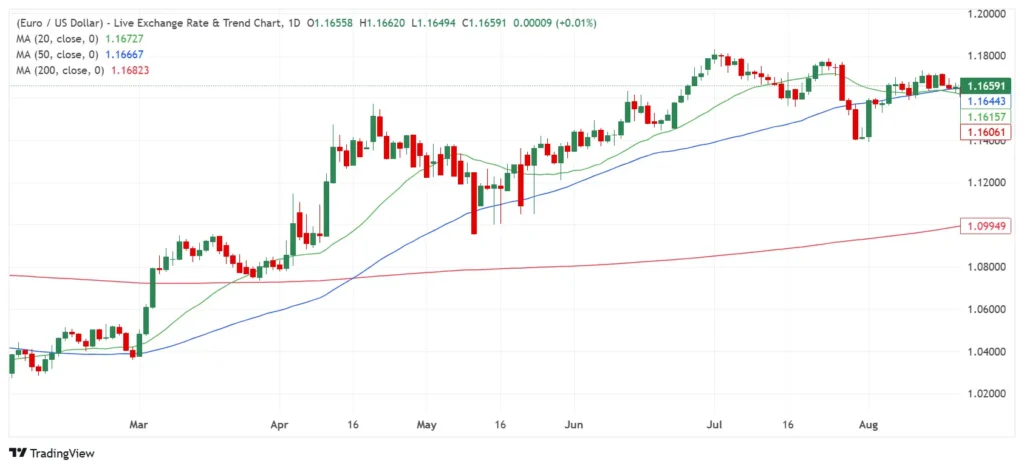
  • Moving Averages (MA): identify trend direction and short-term momentum.
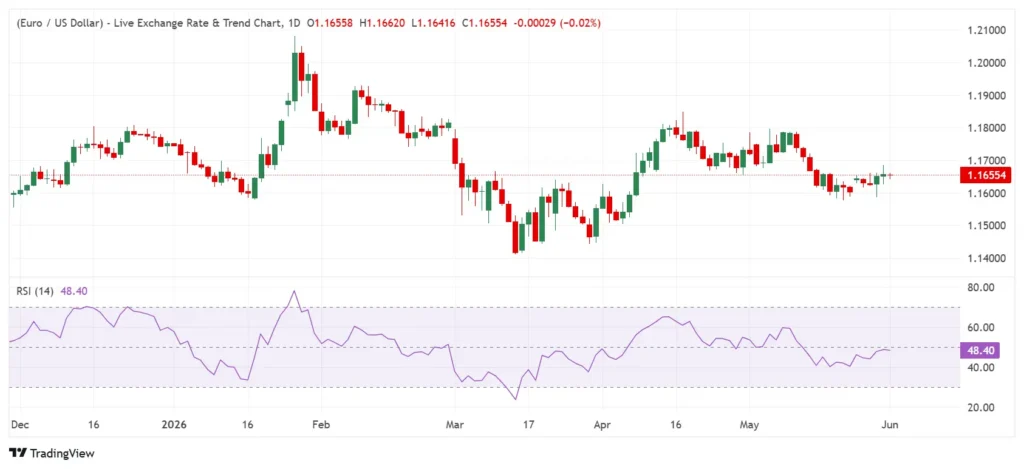
  • Relative Strength Index (RSI): signals overbought or oversold conditions and momentum.
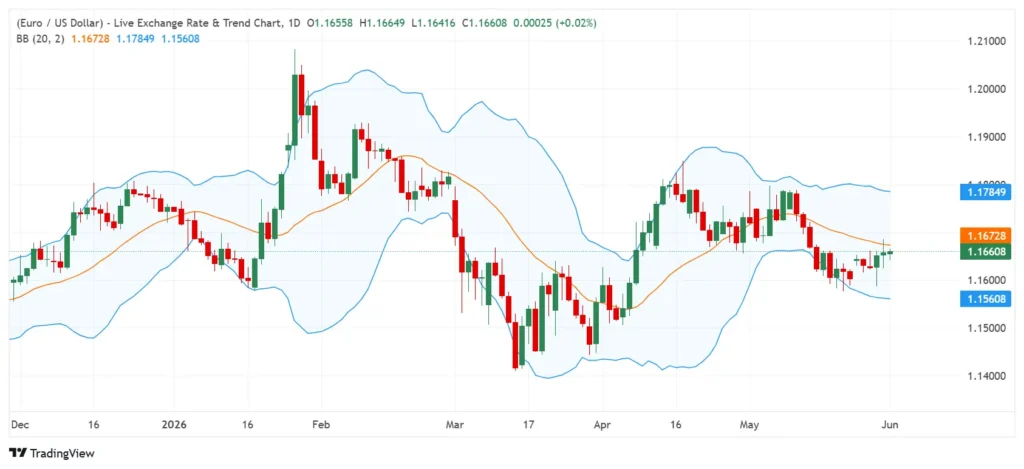
  • Bollinger Bands: show volatility and potential price reversal points.
  • MACD: indicates momentum shifts and trend changes.
  • Volume Indicators: confirm price moves and indicate buying and selling pressure.

Now that we know what scalping is, let’s see how it actually works in practice.

How does scalping simply work in trading?

  1. Choose a highly liquid market, like major forex pairs (EUR/USD, USD/JPY) or stock indices (S&P 500, NASDAQ).
  2. Use short timeframes, such as 1-minute, 5-minute, or tick charts, to spot tiny price movements. And indicators such as Moving averages, MACD, or Trendline to solidify the accuracy of your strategy.
  3. Enter and exit quickly, holding positions for only a few seconds to a few minutes.

Example:

  • Let’s say you decide to buy 0.01 lots of EUR/USD at 1.1000.
  • This means you are buying 1,100 euros (0.01 lots = 1,100 euros).
  • If EUR/USD moves to 1.101, you gain 1 euro in a few seconds or minutes.
  1. Take advantage of tight spreads, since small profits matter and low trading costs are crucial.
  2. Use risk management by setting stop-losses and limiting position size to avoid large losses.
  3. Repeat this many times per day aiming for multiple trades to accumulate profits.

Now that we have seen how it works, let’s explore how scalping differs from other trading styles.

How does scalping differ from other trading styles?

Aside from scalping, other commonly used trading styles, such as day trading, swing trading, and position trading. Each style has its own approach to timeframes, risk, and profit targets. The following table highlights the key differences between scalping and these other trading styles.

 ScalpingDay TradingSwing TradingPositing Trading
Holding periodSeconds to a few minutesMinutes to several hours (closed before market close)Several days to a few weeksWeeks to months or longer
Trading FrequencyVery high, often 10 – 50+ trades per dayModerate around 2 – 10 trades per dayLow, often a few trades per weekVery low, few trades per month
Chart Timeframes1min, 5 min, 15min15 min, 30 min1 hour, 4 hours, dailyDaily and weekly charts
Profit target per tradeVery small price movesSmall intraday price movesMedium price swingsStrong long-term trends
Market ExposureExtremely short exposure as positions close quicklyNo overnight exposureOvernight and multi-day exposureLong-term exposure to market movements
Monitoring RequiredConstant monitoring during trading sessionSeveral hours of active monitoringOccasional monitoring (often once or twice daily)Minimal monitoring (few times per week)
Analysis UsedMostly short-term technical analysis and price actionMainly technical analysisTechnical analysis and some fundamental analysisMainly fundamental analysis

Since scalping involves fast trades and frequent market exposure, managing risk effectively is essential to protect your capital. So, let’s explore how?

How to use risk management in scalping?

  • Use tight stop-loss orders to limit potential losses if the market moves against the position.
  • Risk only a small percentage of trading capital per trade to protect the account from consecutive losses.
  • Aim for a balanced risk-to-reward ratio, even when targeting small price movements.
  • Avoid opening too many trades simultaneously to prevent excessive exposure to market volatility.
  • Focus on highly liquid markets to benefit from tighter spreads and faster order execution.
  • Adjust position size based on account size to keep risk per trade consistent.
  • Follow a disciplined trading plan and avoid impulsive decisions during fast-moving markets.

It’s also important to be aware of the pros and cons of scalping to make informed trading decisions and manage your expectations.

Pros and cons of scalping trading:

Every trading style has its pros and cons and scalping is no exception. The table below highlights the key advantages and disadvantages of this fast-paced trading approach.

ProsCons
Allows traders to capture small price movements, potentially generating small profits from many trades throughout the day. Profits are very tiny, meaning traders must execute many trades to achieve meaningful returns.
Positions are usually held for seconds to minutes, reducing exposure to large market swings or overnight events.Instant decisions are required as positions are held for a very short time period, leaving little time for analysis.
Active market sessions (ex: London or New York in forex) provide strong volatility for scalping.Requires constant market monitoring during active hours and sessions which can be exhausting for some traders.
Reduced exposure to overnight risks, macro news, and gap openings since trades are closed quickly.Frequent trades increase exposure to execution errors and market noise. 
No overnight swap or rollover fees since trades close quickly.High trading frequency leads to significant transaction costs like spreads and commissions.
Some traders enjoy the fast-paced and active trading style.The rapid pace can cause stress, mental fatigue and emotional decision-making.
Can work in both trending and range-bound markets when volatility is present.Less effective in low-volatility or illiquid markets where prices move slowly.

After reviewing the pros and cons, let’s explore the main types of scalping strategies traders use to capture quick profits.

6 key types of scalping strategies:

6-key-types-of-scalping-strategies

Scalpers use different strategies depending on their goals, market conditions, and trading style. The following six strategies are among the most commonly used to capture quick, small profits in fast-moving markets.

  1. Market Making Scalping: 

This strategy involves taking advantage of very small price differences between the bid and ask prices or what is known as the spread.Traders act almost like mini market makers themselves, buying at the bid and selling at the ask repeatedly to make tiny profits that add up over many trades.

  • Traders monitor a highly liquid market.
  • They place buy orders just below the current price and sell orders just above it.
  • When the price moves slightly, they close positions quickly often within seconds to minutes.
  • Profit per trade is small but frequent trades can make the strategy profitable.
  1. Momentum Scalping: 

Focuses on achieving profits from strong price movements in one direction either up or down. Traders try to catch the start of a strong upward or downward move and exit quickly for a small gain before the momentum ends.

  • Traders identify strong momentum using technical indicators such as moving averages, RSI, MACD, or chart patterns.
  • They enter a trade in the direction of the momentum (buy if the price is rising or sell if the price is falling).
  • Positions are held very briefly, often a few seconds to a few minutes aiming for small and quick profits.
  • Traders exit quickly once momentum slows or reverses.
  1. News-Based Scalping: 

Aims to profit from sudden price movements caused by breaking news or economic data releases. Traders aim to react very quickly to market-moving events and capture small gains before the volatility settles.

  • Traders monitor the economic calendar for important events (like CPI releases, central bank decisions or geopolitical news).
  • Immediately after the news is released, they enter trades in the direction of the market reaction.
  • Positions are held for a very short time, often seconds to a few minutes to capitalize on the initial spike or drop.
  • Traders exit quickly because volatility driven by news can reverse quickly.
  1. Range Trading Scalping: 

Seeks to profit from price movements within a defined support and resistance range, it works well in low volatility markets. Traders repeatedly buy near the support level and sell near the resistance level, capturing small price movements as the market fluctuates within the range

  • Traders identify a sideways market where prices move between clear support and resistance levels.
  • They enter buy trades near support where the price is expected to bounce upward.
  • They enter sell trades near resistance where the price is expected to move downward.
  • Positions are held for a very short time usually seconds to minutes and traders exit once a small profit target is reached.
  1. High-Frequency Trading Scalping: 

The strategy relies on using advanced algorithms and extremely fast computer systems to execute a large number of trades within milliseconds. It is extremely fast automated scalping; the goal is to capture very small price differences repeatedly, generating profit through high trading volume.

  • Traders use automated algorithms to analyse market data and identify very small trading opportunities.
  • The system places and executes orders almost instantly, often within milliseconds.
  • Positions are held for extremely short periods, sometimes less than a second.
  • Profits come from many small trades executed at very high speed.
  1. Technical Analysis Scalping:

This strategy relies entirely on charts, indicators, and price patterns to make very short-term trades. Traders analyse price movements, trends, and signals to enter and exit trades quickly for small profits.

  • The trader studies technical indicators such as moving averages, Bollinger Bands, RSI, MACD, or candlestick patterns.
  • They enter trades based on signals like trend reversals, breakouts, or overbought and oversold conditions.
  • Positions are held briefly, usually seconds to minutes, aiming for small quick gains.
  • Traders often combine multiple indicators to confirm entry and exit points.

After learning about the main scalping strategies, it’s important to consider some tips for rookie scalpers.

Can every trader use Scalping? Any Rules and Regulations?

Trading Rules:

Some brokers may impose restrictions on scalping, especially in certain markets or account types. They may set minimum holding time requirements for each trade.

Spreads and Commissions:

Scalping typically requires low spreads and commissions so that traders can profit from small price movements. Therefore, it is crucial to choose brokers that offer low trading costs.

Capital Requirements:

Some brokers may require a minimum deposit to engage in scalping. This deposit requirement usually depends on the account type and trading strategy. 

For example:

Some brokers may require a minimum deposit of several hundred to several thousand dollars to open a scalping account.

Leverage Restrictions:

Scalping often requires high leverage, but some brokers may impose limits on high-leverage trading, especially in volatile markets.

Account Types:

Certain brokers offer account types specifically designed for day trading or scalping, which may feature higher leverage and lower trading costs.

Notes:

When choosing a broker, traders should carefully read the relevant terms and conditions to understand whether there are restrictions on scalping and deposit requirements. It is advisable to select brokers that support scalping and provide favorable trading conditions.

Tips for Rookie Scalpers:

  1. Choose the right market; it is important to focus on highly liquid instruments like major forex pairs or large-cap stocks and avoid low-volume markets as spreads and slippage will be very high.
  2. Pick a reliable platform with fast execution and low latency, quick order placement is crucial for scalping success.
  3. Trade with small positions to limit losses while learning. Avoid high leverage, which can amplify tiny price moves into big losses.
  4. Stick to a few strategies, avoid mixing too many scalping strategies at once, just focus on one or two till you gain confidence and consistency.
  5. Master technical analysis, learn how to read charts, capture trends and use key indicators like RSI or MACD to identify entry and exit points efficiently.
  6. Use strict risk management, always use stop-loss orders and risk only a small portion of your capital per trade to protect your account from unexpected losses.
  7. Practice emotional control, scalping requires quick decisions which can be stressful for many traders, stick to your plan and avoid impulsive trades.
  8. Beginners should avoid very high volatility and trade during stable market conditions till they gain good experience.
  9. Practice on demo accounts to understand timing, spreads and execution without risking real money, this will help you boost your confidence and scalping skills.
  10. Analyse every trading session to see what worked and what didn’t, gradually refine your strategy to improve results over time.

Bottom Line

Scalping can be an exciting and rewarding trading style, but it’s not for everyone. It requires speed, discipline, and careful risk management, along with a solid understanding of strategies and market conditions. By starting small, practising regularly and learning from each trade, rookie scalpers can gradually build the skills and confidence needed to succeed. Remember, consistent success comes from patience, preparation, and sticking to your plan, even in fast-moving markets.

Gold Trading: What It Is, Explore All Types, and Master How It Works

Thanks to gold’s enduring value as both a store of wealth and a safe-haven asset, purchasing physical gold has been a popular investment choice among investors for decades. However, in today’s fast-paced financial markets, understanding what gold is and how to trade gold has become increasingly important, as speculating on global gold prices offers traders and investors new opportunities to capitalize on price movements.

In this article, you’ll learn what gold trading is and explore its different forms, from buying gold bullion and investing in gold stocks to trading spot gold, futures, options, ETFs, and gold CFDs. We’ll outline the key differences between each type, explain how gold trading works, and address the most frequently asked questions about this market.

What is Gold Trading?

Gold trading, in simple terms, refers to any method of buying and selling gold, whether in physical form (such as bullion and coins) or via financial instruments like futures, ETFs, mining stocks, and CFDs. Instead of holding gold purely for long-term value preservation, many traders seek to capitalize on short- or medium-term price movements driven by economic, political, and currency factors.

Gold trading remains popular because it often retains its value during periods of economic uncertainty, making it both a speculative opportunity and a protective asset within a diversified portfolio.

Now that you understand what gold trading is, let’s dive deeper into this market and explore the different types of gold trading.

What Are the Different Types of Gold Trading?

There are several ways to trade gold, and each comes with its own benefits and drawbacks. Based on your trading strategy, costs, and risk tolerance, you can choose the option that best fits your needs. Gold investing can range from buying and selling physical gold bullion or investing in gold stocks to more modern approaches such as trading derivatives like spot gold, futures, options, ETFs, and gold CFDs.

What-Are-the-Different-Types-of-Gold-Trading

In this section, we will explore each type of gold trading in detail.

  1. Gold Bullion trading:

Gold bullion refers to physical gold in the form of bars, ingots, or coins, valued primarily by its weight and purity rather than its collectable or artistic value. It is considered one of the most traditional and tangible forms of gold investment.

Investors trade bullion by purchasing gold bars, ingots, or coins and holding them for the long term, typically as a hedge against inflation and currency devaluation. Since gold is widely recognized as a store of value, bullion can be resold relatively easily to gold retailers, dealers, or financial institutions if the investor needs cash.

Disadvantages or Drawbacks

While owning physical bullion offers security against economic uncertainty, it comes with several challenges:

  • Storage Costs: Keeping gold in a secure place such as a bank vault can be expensive, and costs may vary depending on your country of residence.
  • Security Risks: Storing gold privately at home or in an office carries the risk of theft.
  • Production and Acquisition Costs: Physical gold carries production costs (minting and refining fees).
  • Full Capital Requirement: Purchasing bullion requires paying the full amount upfront, with no leverage or instalment options.

While owning gold bullion is the most traditional way to invest in gold, some investors prefer a more indirect approach, buying shares in gold-related companies. Let’s have a look at investing in gold stocks.

  1. Investing in Gold Stocks:

Some investors gain exposure to gold by investing in the stocks of gold-related companies, such as major gold mining firms, producers, refineries, or jewelry manufacturers. Buying and selling these stocks provides partial exposure to the gold market, as their prices often fluctuate in response to gold-related factors.

For example, changes in gold prices can directly impact their asset/storage values, the revenues and profitability of refineries, which in turn affect their stock prices. While the performance of these companies may correlate with the price of physical gold, this correlation is not always consistent due to other business and market factors.

For investors seeking to avoid the liquidity constraints, storage challenges, and other logistical issues associated with owning physical gold, stocks of gold mining and production companies are often viewed as a practical alternative.

Drawbacks of Investing in Gold Stocks:

  • Limited trading hours can limit flexibility compared to 24/5 markets, such as gold CFDs.
  • Requires relatively larger capital to build a meaningful position.
  • Company-specific risks (e.g., operational issues, management changes, geopolitical factors) can affect stock performance even if gold prices rise.
  • Stock prices may sometimes move independently of gold prices, reducing the direct benefit of gold exposure.

Unlike stocks, spot gold trading allows you to engage directly with gold’s live market price, reacting instantly to market movements. See the following section exploring spot gold trading.

  1. Spot Gold Trading:

Spot gold refers to the current price at which gold can be bought or sold for immediate delivery. In the global financial markets, the spot price is quoted per troy ounce in US dollars and fluctuates in real time based on global supply and demand, as well as external economic and geopolitical factors. Unlike futures contracts, spot gold has no set delivery date.

How It Works:

  1. Check the live spot price of gold.
  2. Place a buy order with a broker or trading platform that offers spot gold trading.
  3. The trade is settled immediately or within T+2 days (two working days).
  4. If the price rises, you can close your position and take the profit.
  5. If you expect the price to drop, you can go short (sell) to profit from the downward movement.

Where Is Spot Gold Traded?

Spot gold is traded 24 hours a day across major global trading hubs, including:

  • London – London Bullion Market Association (LBMA)
  • New York – COMEX (Commodity Exchange)
  • Zurich – Swiss gold trading hub
  • Hong Kong – Asian market gateway
  • Shanghai – Shanghai Gold Exchange (SGE)
ProsCons
High liquidity with round-the-clock global trading.Requires a trusted and regulated broker with a platform that supports spot gold trading.
No delivery date, offering more flexibility for short-term trading.Prices can be volatile due to geopolitical or economic news, making it risky and requiring a high level of risk management.
Direct exposure to gold price movements without owning physical gold.Short-term focus may lead to higher transaction costs for frequent traders.

For those looking for more leverage and structured contracts, gold futures offer a standardized way to trade gold at a set price and date. Let’s address gold futures trading in the following part.

  1. Gold Futures Trading:

Gold futures are standardized contracts to buy or sell a specific amount of gold at a predetermined price on a set future date. They are traded on regulated exchanges, such as the COMEX (a division of the CME Group). Futures allow traders to speculate on the direction of gold prices without owning physical gold.

How to Trade Gold Futures:

  1. Open an account with a broker that offers futures trading.
  2. Choose a contract (e.g., COMEX Gold Futures – typically 100 troy ounces per contract).
  3. Decide your position:
  • Go long if you expect gold prices to rise.
  • Go short if you expect prices to fall.
  1. Meet the margin requirements (only a fraction of the contract value is needed to open a position).
  2. Close or roll over the contract before expiry to realize profits or cut losses, or take delivery if applicable (rare for speculators).
ProsCons
Leverage: Control a large gold position with a smaller initial margin.High risk from leverage: Losses can exceed the initial margin if prices move against your position.
Liquidity: Gold futures are actively traded, making it easier to enter and exit positions.Limited trading hours compared to spot gold, though extended hours are available.
Hedging: Useful for miners, jewelers, and investors to protect against price fluctuations.Complexity: Requires understanding of futures contracts, margin calls, and rollovers.
Price transparency: Traded on regulated exchanges with standardized contracts.Potential for rapid price swings due to economic or geopolitical events.

Options built on the futures market by adding flexibility, traders can secure the right, but not the obligation, to buy or sell gold at a predetermined price. Let’s check how they’re working.

  1. Gold Option Trading

A gold option is a financial contract where the underlying asset is either physical gold or gold futures.

  • A call option gives the holder the right, but not the obligation, to buy gold at a predetermined price (strike price) within a specific time frame.
  • A put option gives the holder the right, but not the obligation, to sell gold at a predetermined price.

All contract details, such as delivery method, quantity, strike price, and expiration date, are predetermined.

How to Trade Gold Options

Gold options are traded on regulated exchanges, including:

  • COMEX (part of the CME Group) in the United States
  • Tokyo Commodity Exchange (TOCOM) in Japan
  • Multi-Commodity Exchange (MCX) in India

Some brokers also offer over-the-counter (OTC) gold option products.

Pros and Cons of Gold Options:

ProsCons
Flexibility: Choose between calls and puts to profit from rising or falling gold prices.Loss of value over time: Option value erodes as expiration approaches.
Limited risk for buyers: Maximum loss is limited to the option premium paid.Complexity: Requires understanding of option pricing, volatility, and Greeks.
Leverage: Control a larger gold position with a smaller upfront cost.Liquidity risk: Some option contracts may have low trading volume, leading to wider bid-ask spreads.
Hedging tool: Can protect other gold investments from adverse price movements.Premium cost: Can be expensive in high-volatility markets.

For a hassle-free and more accessible way to gain gold exposure, Gold ETFs bring the metal’s performance to the stock exchange without the need to manage physical holdings. Discussed in the following part.

  1. Gold ETFs Trading: (Exchange-Traded Funds)

Gold ETFs are exchange-traded funds that track the price of physical gold in the domestic market. They are considered a passive investment option linked to gold’s performance and are traded on stock exchanges like individual company shares.

How Gold ETFs Work:
Gold ETFs operate like mutual funds that are traded on stock exchanges. Each unit of a gold ETF represents a fixed quantity of physical gold (usually 1 gram), stored securely in vaults by the fund’s custodian. When you buy a gold ETF, you’re not physically taking delivery of gold; instead, you hold units that reflect the current market price of gold. The value of your investment moves in line with gold prices, and you can buy or sell these units throughout the trading day, just like stocks.

How to Trade Gold ETFs & Where

  1. Open a trading or Demat account with a registered broker.
  2. Search for a gold ETF listed on your preferred exchange.
  3. Place a buy or sell order like you would for any stock.
  4. Monitor price changes and sell when your target is met.

Where to Trade:

  • NYSE (New York Stock Exchange) – e.g., SPDR Gold Shares (GLD).
  • LSE (London Stock Exchange) – e.g., iShares Physical Gold ETC.
  • NSE/BSE (India) – e.g., Nippon India Gold ETF.

Pros and Cons of Gold ETFs:

ProsCons
Hassle-free way to invest in gold without physical storage issues.Subject to market risk (systematic risk).
High liquidity – easily bought and sold on stock exchanges.Capital gains tax may apply to profits.
Diversifies your portfolio and reduces concentration risk.Management fees or expense ratios reduce net returns.
Acts as a hedge against inflation and currency depreciationIt may not perfectly track gold prices due to tracking error.

While Gold ETFs provide a passive and convenient way to mirror gold’s price on stock exchanges, Gold CFDs offer a more active trading approach, allowing traders to speculate on gold price movements with leverage, in both rising and falling markets, without owning the underlying asset. Let’s learn more about gold CFD trading.

  1. Gold CFDs Trading:

Gold trading involves speculating on price movements in spot and futures markets. You can use derivatives like Contracts for Difference (CFDs) to trade gold without owning it physically and to take advantage of both rising and falling markets. Below are the core aspects you need to understand how to trade gold CFDs:

Placing Trading Positions

When you’re trading gold CFDs, you can capitalize on gold price movements without owning the physical gold. As we discussed above about gold CFDs, you can easily place orders based on your anticipation and analysis: 

  • If you anticipate gold prices will rise, you can go long (buy) to profit from upward movements.
  • If you expect prices to fall, you can go short (sell) to profit from declines. CFDs make it possible to trade in both directions without owning the asset.

Trading Costs

The costs associated with CFD trading can be divided into two components: 

  • Spread: The difference between the buy (ask) and sell (bid) price of gold. In highly liquid markets, spreads are typically tighter, which reduces trading costs.
  • Swap: Also known as an overnight financing fee, this is charged when you keep a position open overnight. Some brokers offer swap-free accounts for specific clients or under certain conditions.

Trading on Margin

CFDs allow you to use leverage, meaning you only need to deposit a fraction of the full trade value (margin) to open a position. This magnifies both potential profits and potential losses. For example, with 1:20 leverage, a $1,000 margin controls a $20,000 gold position.

Gold Trading Hours

Gold can be traded 24 hours a day, 5 days a week across three global sessions: the Asian (00:00–09:00 GMT), European (07:00–16:00 GMT), and U.S. (13:00–22:00 GMT) sessions.

The highest volatility and liquidity typically occur during session overlaps, especially the London–New York overlap between 13:00 and 16:00 GMT, as well as the transition from the Asian to European session between 07:00 and 09:00 GMT. 

These periods often provide tighter spreads and more active price movements, offering prime opportunities for gold CFD traders.

Market Liquidity & Volatility

High liquidity generally means tighter spreads and faster order execution. However, gold is also sensitive to key economic data, central bank policies, and geopolitical events, which can cause high volatility, impacting both opportunities and risks.

Gold Trading Platforms

Popular platforms like MetaTrader 4 (MT4) and MetaTrader 5 (MT5) offer advanced charting tools, technical indicators, automated trading via Expert Advisors (EAs), and user-friendly interfaces, making them the preferred choice for many gold CFD traders.

Pros and Cons of Gold CFD Trading:

ProsCons
High liquidity in global markets.Leverage can amplify losses as well as gains.
Flexible, trade in both rising and falling markets.Overtrading risk due to the ease of market access.
24/5 trading hours, matching global gold market activity..Requires disciplined risk management.
No need for large capital, thanks to leverage.OTC market, counterparty risk if the broker is unregulated.
No physical gold is involved; accessible anywhere with an internet connection.Overnight costs or swaps can be high during periods of low liquidity, often accompanied by wider spreads.

Now that we’ve explored all the major ways to trade gold, from physical bullion to advanced derivatives like CFDs. It’s time to compare these options side by side and highlight the key differences that can influence your trading decisions.
The Key Differences Between Gold Trading Types:

FeatureGold BullionGold StocksSpot GoldGold FuturesGold OptionsGold ETFsGold CFDs
Where TradedJewelry shops, gold dealers, banksStock exchangesOTC market, broker platformsRegulated commodity exchanges (e.g., COMEX)Options exchanges (e.g., CME)Stock exchangesOTC via online brokers
Trading HoursBusiness hours of dealersExchange hours24/5Exchange hours (extended hours possible)Exchange hoursExchange hours24/5
OwnershipPhysical goldShares of companies in the gold industryNo ownership (price speculation)No ownership (contract-based)No ownership (right to buy/sell)No ownership (ETF holds gold)No ownership (price speculation)
Capital RequirementHigh (full payment upfront)Medium to highFlexible (depends on broker margin)Medium to high (margin required)Medium (premium payment)Low to mediumLow (due to leverage)
CostsProduction, storage, insuranceBrokerage fees, capital gains taxSpreads, possible commissionsExchange fees, margin costsPremiums, commissionsManagement fees, brokerage feesSpreads, overnight swap charges
Best ForLong-term wealth storage, inflation hedgeIndirect exposure to goldActive traders/speculatorsExperienced traders, hedgingStrategic traders, hedgingPassive investors, diversificationActive traders seeking flexibility

Based on the key differences between the trading types illustrated, you can easily determine what type of trader you are and which method best fits your trading style, personality, and strategy.

Summary

Keep in mind that you can also combine multiple approaches. For example, you could divide your investment capital between purchasing physical gold and trading gold CFDs. This way, you hedge against inflation and currency devaluation through physical gold, while at the same time capitalizing on global gold price movements and hedging the value of your own gold holdings.

FAQs:

Why Do People Trade Gold?

There are three reasons why:

  • Safe-Haven Demand: Gold is viewed as a store of value during periods of political instability, war or economic downturns.
  • Inflation Hedge: Investors often turn to gold when currencies lose purchasing power.
  • High Liquidity: Gold is one of the most actively traded commodities, making it easy to enter and exit positions.

Can beginners trade gold?

Yes, beginners can trade gold, especially through gold CFDs, as they can start with a small amount of capital thanks to leverage. They can also practice on a demo trading account provided by most CFD brokers before moving to a live account, aiming to make small profits with minimal risk.

Is trading gold a good idea?

Gold is considered a store of value as its price generally rises over the long term. It’s favored by investors, traders, and central banks to hedge against inflation and geopolitical risks. Allocating part of your portfolio to gold can help you benefit from its high liquidity, volatility, and frequent trading opportunities. Gold serves as a diversifier in an investment portfolio, helping manage risk.

Why is gold trading risky?

Gold trading is risky due to its high volatility, which can cause rapid price swings driven by key economic data, changes in interest rate policy predictions, and geopolitical events. Using leverage in products like CFDs can amplify both profits and losses. Additionally, market liquidity and sudden news can lead to wider spreads, increasing trading costs.

What’s the Difference between Technical Analysis and Fundamental Analysis?

Technical analysis vs fundamental analysis which is better? First, we need to know what’s the difference between technical analysis vs fundamental analysis, trading can feel like a maze. Why does the price go up or down and when is the right moment to act? That’s where technical analysis and fundamental analysis play a key role in guiding trading decisions.
Technical analysis is all about reading charts and patterns to guess where prices might head next, while fundamental analysis looks at the bigger picture, things like a company’s health, growth potential, economic trends, and news that can move the market.

Each approach gives you useful insights, but in different ways. That’s why smart traders don’t rely on just one analysis method. Combining both lets you spot trends and understand why they happen, helping you choose the best moments to enter or exit trades and reduce potential risks.

This article will walk you through each type of analysis, its goals, pros and cons, and key tools, and will also show how combining them can help you optimize your trading decisions.
So, let’s start by exploring technical analysis, the method traders use to analyze price movements, spot trends, identify key levels, and decide when to enter or exit trades.

What is technical analysis?

Technical analysis is the study of past market prices and trading volumes to predict future price movements. Instead of focusing on the asset’s true value or economic factors, it focuses on chart patterns, trends, and signals to help decide when to buy or sell.

It simply answers when the price will move by looking at past price movements and patterns.

Role of technical analysis in trading:

1. Analyze historical prices to predict direction: the main objective of technical analysis is to predict the likely future direction of an asset’s price by studying historical market data, especially price action and trading volume.

2. Focus on price behaviour, not intrinsic value: instead of trying to figure out an asset’s true value, technical analysis focuses on how prices actually move in the market.

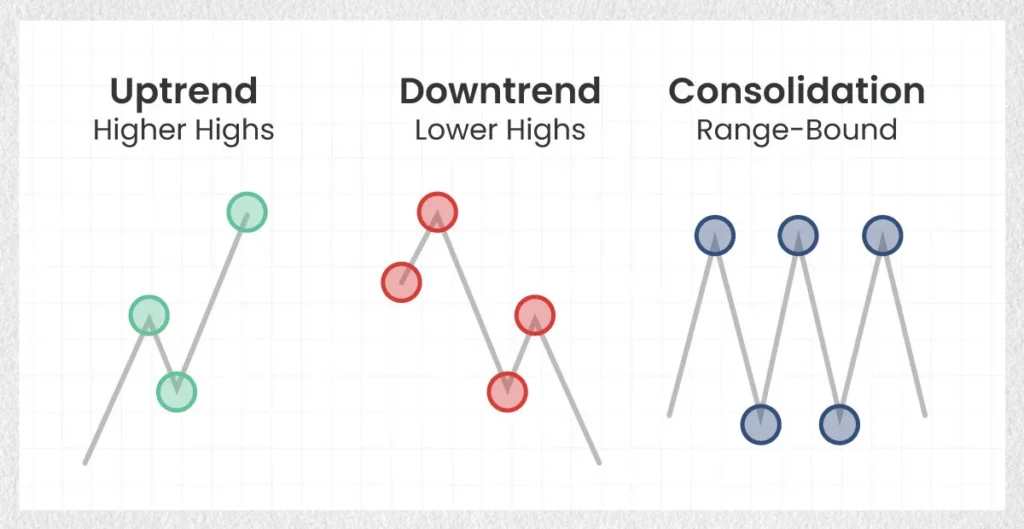
3. Spot trends and patterns: it helps identify recurring chart patterns, trends, and price behaviours like uptrends, downtrends, and support or resistance levels that may signal potential future price movements.

4. Gauge momentum and strength: technical analysis measures the speed and strength of price movements using momentum indicators to evaluate whether a trend is likely to keep going or reverse.

5. Optimize trade entry & exit timing: it helps traders identify potential entry and exit points based on price action and technical signals.

6. Support short to medium-term trading: studying price patterns and market sentiment can help day or swing traders predict short-term price movements.

7. Assume price reflects available information: technical analysis is based on the idea that prices incorporate available information, so studying price movements can provide insights into likely future trends.

After understanding what technical analysis is and how it works, let’s move to fundamental analysis, which focuses on the factors that drive an asset’s value.

What is fundamental analysis?

Fundamental analysis is the study of factors that can affect an asset’s price, such as its financial health, growth prospects, economic conditions, and market news. Instead of just looking at charts, it focuses on these price driving factors to help traders decide when to buy or sell.

It simply answers why the price will move by looking at economic, financial, and market factors that could influence price.

Role of fundamental analysis in trading:

1. Determine the intrinsic value of an asset: Fundamental analysis aims to estimate an asset’s fair value by examining macroeconomic indicators, other economic factors, financial statements, and earnings reports. Comparing intrinsic value with the current market price helps in identifying undervalued or overvalued assets.

2. Reflect the bigger economic picture: It focuses on macroeconomic indicators, central bank decisions, political developments, and global supply and demand trends to understand what is driving foreign currencies, commodities, stocks and other assets in financial markets.

3. Help traders gauge market reaction: By analyzing fundamentals, traders can predict how market participants may respond to economic data, earnings announcements, or geopolitical events, indirectly influencing price movements.

4. Evaluate company growth and financial strength: Fundamental analysis assesses a company’s growth potential and overall financial health by examining earnings, market expansion, technological innovation, and key financial statements such as the balance sheet, income statement, and cash flow statement.

5. Identify potential risks: It helps uncover risks that may affect an asset’s performance, such as high debt levels, regulatory changes, economic slowdowns, geopolitical tensions or supply disruptions.

6. Support medium to long-term trading: Fundamental analysis is commonly used by position traders. It helps traders make decisions based on underlying value rather than short-term market noise.

7. Improve portfolio allocation and diversification: By analyzing different assets, sectors, or markets, traders can allocate capital more efficiently, balancing growth opportunities with risk exposure.

As we explained both methods, it’s important to understand the main differences between technical and fundamental analysis.

The key differences between fundamental and technical analysis:

To understand how fundamental and technical analysis really differ, let’s compare them side by side. The table below highlights their main differences, from decision-making approaches to the tools and data they rely on.

 Fundamental AnalysisTechnical Analysis
Main ObjectiveEstimate the intrinsic (fair) value of an asset by analyzing economic, financial and macro factors.Predict potential future price movements by analyzing historical market data (price, volume, patterns).
Decision BiasEconomic strength and financial health determine trading bias.Price behaviour determines entry and exit points.
Type of Data UsedEconomic indicators (GDP, inflation, interest rates)Central bank reports & announcements.Company financial statements (balance sheet, income statement, cash flow).Earnings reports & forecasts.News & geopolitical events.Analyst reports / ratings.Price charts (line, bar, candlestick).Trend lines & channels.Support & resistance levels.Moving averages (SMA, EMA).Oscillators (RSI, MACD, Stochastic).Volume indicators.Chart patterns (head & shoulders, triangles, flags)Fibonacci retracements.
Time HorizonCommonly, medium to long-term (position trading).Short-term to medium-term (scalping, day trading, swing trading).
Reaction to NewsDirect analysis for economic reports, earnings releases, and geopolitical developments.Evaluates how price reacts to news rather than the news itself.
Market SentimentGauges market expectations through fundamental eventsCaptures market psychology and traders’ behaviour reflected in prices.
Risk Management ToolsFinancial ratio analysis, macroeconomic evaluation, and earnings assessment.Stop-loss & take-profit placement, risk-reward ratio calculation, and volatility measurement.

While both analysis methods are valuable in their own way, each approach has its pros and cons. Let’s break them down.

Pros and cons of technical and fundamental analysis:

Each analysis has its strengths and weaknesses and knowing them will definitely help you trade smarter. Here’s a side by side look at the pros and cons of technical and fundamental analysis. 

Analysis TypeProsCons
Technical AnalysisHelps identify potential entry and exit points based on price patterns, trends and technical indicators.Works well for short and medium-term trading.Helps manage trade risk by setting stop-loss, take-profit levels and adjusting position size based on market volatility.Can be applied in any market where reliable price data exists.Charts update in real time, supporting timely decision-making.May generate false or misleading signals (Ex: false breakouts).Ignores underlying economic and financial conditions.Different traders may interpret charts differently.Based only on historical price data and signals.Lacks insight into long-term price movements.
Fundamental AnalysisHelps estimate intrinsic (fair) value of an asset.Explains price movements through economic and financial drivers.Supports medium and long-term investment decisions.Evaluates financial strength, sustainability, and growth potential.Assesses economic and geopolitical risks.Provides a deeper understanding of underlying value drivers.

Time-consuming and requires detailed economic or financial analysis.Less precise for short-term trade timing.Market prices can remain above or below intrinsic value for extended periods due to sentiment, speculation, or market inefficiencies.Some qualitative factors are difficult to measure precisely.

Now that we have explored the strengths and weaknesses of each approach, let’s take a closer look at the key tools used in both fundamental and technical analysis.

What are the key tools used in fundamental & technical analysis?

Each type of analysis has its own set of tools for traders. Fundamental analysis relies on financial reports and economic news, while technical analysis uses charts, indicators, and patterns to read the market. Let’s explore in more details.

Key tools used for fundamental analysis:

  • Economic indicators: provide insight into the overall health and growth of an economy, which can affect currency, stock, or commodity prices.

Ex: GDP, inflation rates, employment figures, interest rates, trade balance.

  • Central bank reports & announcements: influence market expectations about interest rates, money supply, and economic policy.

Ex: Federal Reserve statements, ECB, BoE, BoJ or any other key central bank policy updates.

  • Company financial statements: evaluate a company’s financial health, profitability, liquidity, and long-term sustainability.

Ex: balance sheet, income statement, cash flow statement.

  • Earnings reports & forecasts: help traders assess the growth potential of a company or sector, especially when it comes to evaluating a stock’s performance.

Ex: Strong earnings often lead to price increases, while missed expectations may result in declines.

  • News & geopolitical events: affect market sentiment and can lead to sharp or short-term price movements.

Ex: political developments, trade agreements, conflicts, wars and natural disasters.

  • Analyst reports & rating: provide expert opinions on asset valuation and market outlook, helping traders refine their decisions.
Ex: Morgan Stanley, Goldman Sachs, JP Morgan, Bank of America, Credit Suisse, UBS, Moody’s, S&P Global Ratings.

Key tools for technical analysis:

When it comes to technical analysis, there are many tools available. The following table explains the most commonly used ones, along with their descriptions and signals. Traders can choose tools based on their strategy and trading style.

CategoryTool / IndicatorDescriptionSignals
Price ChartsLine ChartShows closing prices, only simple trend view.Visualize overall trend, limited signals due to lack of OHLC data.
Bar ChartShows Open, High, Low, Close (OHLC).Detect price range, movement, support/resistance, and trend changes.
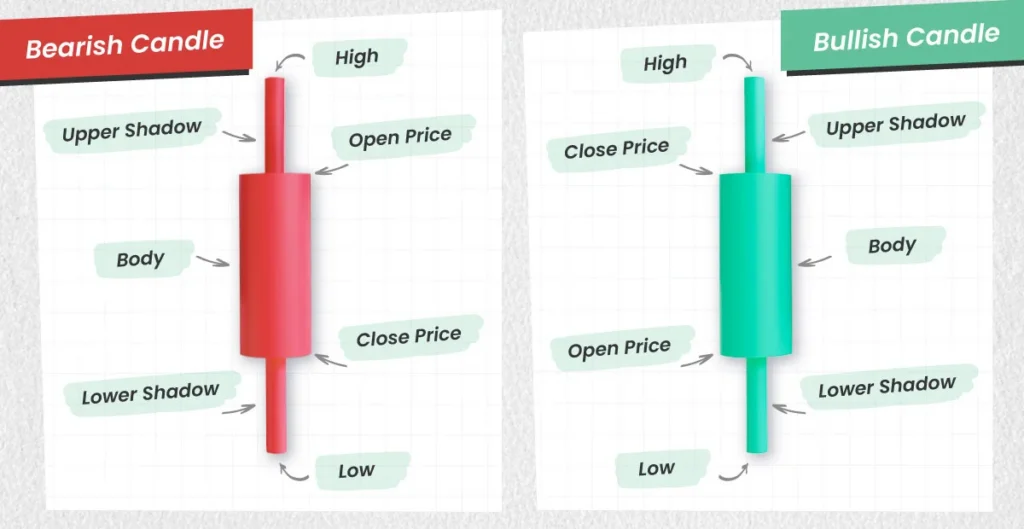
Candlestick ChartMost popular; OHLC shown with candles (body = open-close, wicks = high-low). Colour shows bullish/bearish.Shows short-term momentum and market sentiment; helps spot trend continuation and potential reversals.Candlestick patterns also provide key trading signals, like:Doji: indecision, possible reversal.Hammer: bullish reversal after a downtrend.Engulfing: strong reversal signal (bullish or bearish).Shooting Star: bearish reversal after an uptrend.
Trend & DirectionTrend LinesLines connecting higher lows (uptrend) or lower highs (downtrend).Identify trend direction, if the price breaks the trend line, it may signal a trend reversal or acceleration.
ChannelsTwo parallel trend lines containing price movement.Price often bounces within the channel; breakout may indicate trend continuation or reversal depending on the overall trend.
Moving Averages (SMA, EMA)Smooth price data.SMA = simple averageEMA = more weight to recent prices (reacts faster).Price crosses above MA = bullishPrice crosses below MA = bearishCrossovers indicate trend change.
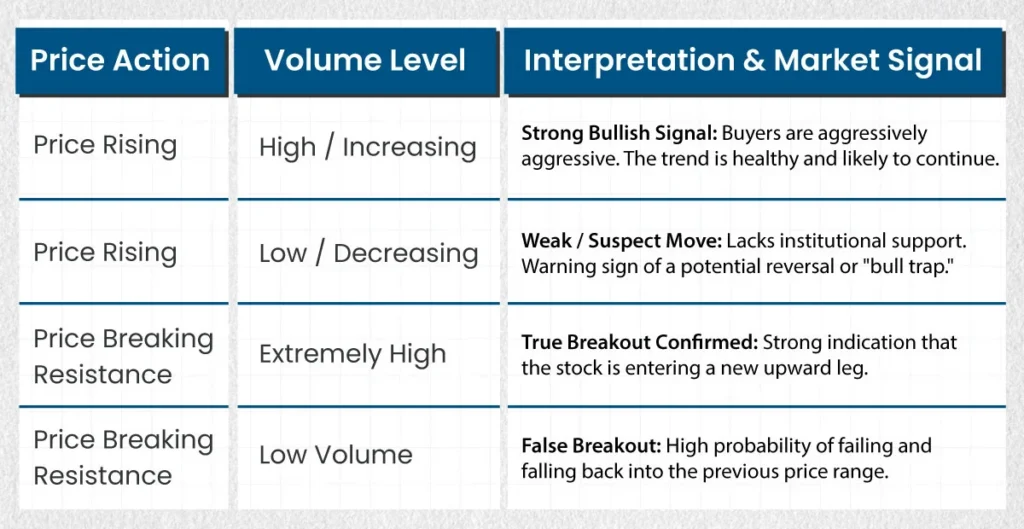
Support & ResistanceSupport / Resistance LevelsPrice levels where buying or selling pressure prevents the price from moving further.Support stops price from falling while Resistance stops price from rising.Price bouncing off support is a potential buy signal.Price falling at resistance is a potential sell signal.Breakouts above resistance or below support, may indicate strong trend continuation, but wait to see if the price holds or volume increases.  
OscillatorsRSIMeasures the speed and change of price movements over a set period (usually 14 periods) on a scale of 0–100.>70 (overbought): price may fall (sell). <30 (oversold): price may rise (buy). Divergence with price: possible trend reversal. Crossing 50 can indicate momentum direction.
MACDShows the difference between a fast EMA (12 periods) and a slow EMA (26 periods).Signal line: 9-period EMA of MACD line.Histogram: difference between MACD line and signal line, shows trend strength.MACD line crossing above signal line: bullish (buy).MACD line crossing below: bearish (sell). Divergence from price: possible trend reversal.Histogram size indicates trend strength.
Stochastic OscillatorCompares closing price to the high-low range over a set period (usually 14 periods) on a scale of 0–100.%K line crossing %D line above 80: overbought (sell). %K line crossing %D below 20: oversold (buy). Divergence with price is a possible reversal.
Volatility IndicatorsBollinger BandsConsists of a middle line (20-period SMA) and upper or lower bands set at standard deviations from the SMA.Bands widen signals high volatility.Bands narrow signals low volatility.Price touching or crossing bands can indicate overbought or oversold levels or potential breakouts.
ATRMeasures average price movement (range) over a set period (commonly 14 candles).High ATR: high volatility.Low ATR: low volatility.Helps determine stop-loss levels and position sizing, does not indicate direction.
Fibonacci RetracementFibonacci LevelsHorizontal lines at key Fibonacci levels (23.6%, 38.2%, 50%, 61.8%) are drawn between a significant high and low.Price bouncing at a level signals a potential entry.Price breaking a level signals a trend continuation.Levels act as potential support or resistance and should be confirmed with price action or other indicators.
Chart PatternsHead & ShouldersReversal pattern with three peaks: middle peak (head) higher than two shoulders. An Inverse Head & Shoulders indicates a potential bullish reversal.Break of neckline signals trend reversal. Confirmation comes from price closing beyond the neckline.
TrianglesFormed by converging or sloping trend lines. Types: SymmetricalAscendingDescendingPrice tends to break out of the pattern.Symmetrical usually continues the prior trend.Ascending breakout usually up.Descending breakout usually down.
FlagsShort consolidation after a sharp price move, rectangle-like (flag) or small triangle (pennant).Breakout in the direction of prior t trend signals continuation. 

After covering the key tools, let’s discover how merging technical and fundamental analysis can make your trading smarter and how to combine them efficiently.

Benefits of merging technical analysis and fundamental analysis:

Combining fundamental and technical analysis helps traders get a complete picture of the markets. Fundamentals explain why prices move, while technicals show when to act. Together, they improve trade timing, confirm signals, and enhance risk management for more informed trading decisions.
The following points highlight the key benefits of merging both analysis methods together:

  1. Comprehensive market understanding: fundamental analysis reveals the intrinsic value of an asset, economic health, and long-term trends while technical analysis shows how market participants are behaving and identifies price patterns, momentum, and trends. Combining both gives a complete picture, why the price might move (fundamentals) and when it might move (technicals).
  2. Flexibility across different timeframes: fundamentals are more effective for medium to long-term strategies (swing, position trading) while technicals are often used for short-term strategies (day trading, scalping). Merging the two allows traders to adapt their strategies across multiple timeframes.
  3. Stronger trade confirmation: fundamental analysis informs traders what direction the market is likely to move while technical analysis tells when to enter and exit trades. When both align, the probability of a successful trade increases.

Ex: fundamentals suggest currency strength due to strong economic data and technicals show breakout + bullish momentum.

  1. Reduce false signals: technical patterns may fail due to unexpected macroeconomic events (ex: false breakouts). A fundamental view helps filter out weak technical setups and reduces the risk of entering trades against the dominant market trend.

Ex: bearish technical pattern appears while central bank policy strongly supports currency strength.

  1. Better risk management: by analysing fundamentals, traders understand long-term risks (ex: company debt, economic downturns, geopolitical events). While technical indicators help monitor short-term volatility and trend reversals. Together, they support better informed position sizing and stop-loss placement based on both market conditions and price structure.

How to effectively combine technical and fundamental analysis?

Here’s how combining technical and fundamental analysis can give you a clearer picture of the market and help you make informed trading decisions.

  1. Analyze the fundamentals: to decide which way the market is likely to move before looking at charts.
  • Monitor the economic calendar to check the major releases relevant to your traded asset.

For example:

Forex: Interest rate decisions, GDP, inflation, and jobs data.

Stocks: earnings report, revenue growth, and financial ratios.

Commodities: supply and demand reports, geopolitical events, and economic indicators.

  • Determine the overall direction, bullish, bearish, or neutral.
  • Identify key events or news that could cause volatility.
  1. Identify key technical levels: conduct chart analysis, the goal is to know where price could reverse, break, or continue.
  • Look at price charts depending on your trading style (daily, 4H, 1H).
  • Identify support & resistance, trend lines, moving averages, chart patterns (ex: double top, triangle).
  • Check momentum indicators (RSI, MACD) for overbought or oversold zones.
  1. Look for alignment between FA & TA: to increase probability of trading success.
  • Only take trades when fundamental bias matches technical setup, for example if fundamentals are bullish, look for buy opportunities near support and if fundamentals are bearish look for sell opportunities near resistance.
Descending Trendline
  • Avoid trading against fundamentals unless you have a strong short-term technical reason.
  1.  Plan stop-loss and take-profit: to trade with risk management.
  • Use a stop-loss order below or above key support/resistance level.
support & resistance zone
  • Use a take-profit order, place it near recent highs/lows or key Fibonacci levels where price may reverse.
  1. Monitor news and adjust: the goal is to avoid being surprised by any fundamental events.
  • Before trade execution, check if any major news could move the market instantly.
  • Be ready to adjust or cancel the trade if unexpected fundamentals appear.
  • Track your trade and learn from outcomes.
  1. Review and learn: to build a consistent strategy using both fundamental and technical analysis.
  • After trade closure, check if your analysis was correct.
  • Take notes, photos or video to improve your next trades.

As we learned, the real strength in trading comes from merging technical and fundamental analysis. Technical analysis tells you when to act, while fundamental analysis explains why prices move. Together, they give you the full picture helping you spot opportunities, understand market trends, and make smarter and lower-risk decisions. And that’s the difference between a good and a great trader. So, which one do you want to be?

A Rookie’s Guide of Candlestick Patterns

In this article we will learn about how to read the 10 major candlestick patterns and how to interpret it, the candlestick charts might look like a bunch of squiggly lines and colorful rectangles at first, but once you get the hang on them, they’re more like your (BFF) best friend forever who always knows when things are about to go up or down. Now grab your coffee (or your favorite drink or snack), because we’re about to make candlestick chart reading easy and fun. So, let’s make a great move and dive into the world of trading and learn the few most major candlestick patterns!

What are Candlestick Patterns?

At its simplest, a candlestick chart is a visual representation of price movements over a set period. Each candlestick consists of a “body”, two “wicks” (or “shadows”) and two “colors”. 

  • The body tells you if the price went up or down within a specific time frame. 
  • The wicks? Well, they show the highest and lowest price reached during that time. 
  • The colour of the body is key: a green (or white) candlestick means the price has gone up, while a red (or black) candlestick indicates the price has gone down. Think of it like the market’s mood, green for bullish, red for bearish.
What-are-Candlestick-Patterns

Candlestick patterns are like the market’s little mood indicators, they show you when things might be trending up, down, or about to change direction. Traders can use them to interpret market sentiment and get a sense of where prices might head next. Whether traders are riding a trend or looking out for a potential turning point, Recognize patterns, like the Bullish Engulfing or a Doji, these patterns will help traders  make smarter, more informed trading decisions. 

A Little History Lesson: Who Invented Candlestick Patterns?

Let’s take a time-travel detour, shall we? The use of candlestick patterns dates back to the 17th century, and it wasn’t some Wall Street whiz who came up with them. The credit goes to a Japanese rice trader named Munehisa Homma, who lived in the city of Sakata. While trading rice futures (yes, rice! Not exactly Bitcoin or gold), he discovered that price movements followed certain patterns, which helped him make more successful trades. Homma is often called the father of candlestick charting. So next time you glance at a chart, tip your hat to Munehisa for his market genius!

How Do You Read Candlestick Patterns?

After we have covered the history and fundamentals of candlestick patterns, let’s move on to how to interpret them and apply them to spot market trends. Candlestick patterns allow you to see the sentiment of the market and determine whether the bears or the bulls are in charge. They function similarly to a trader’s cheat map for comprehending price fluctuations.

But here’s the thing: every candlestick pattern has a unique role, and some are more suited to identifying particular trends than others. Let’s begin to explore how to interpret these patterns, and which ones are most useful for spotting market trends? We’ll discuss the most important ones that provide you with the best indication of the potential direction of the market.

  1. The Bullish Engulfing Pattern

The stock market is like a game of tug of war. When the (buyers) bulls take control, they often do so in a big way, and that’s what the bullish engulfing pattern is all about. It is formed by 2 candlestick, it happens when a small red (down) candlestick is completely engulfed by a larger green (up) candlestick. This suggests that the bulls are taking over and could drive prices higher.

Bullish Engulfing Pattern

Best For: 

Stock Market, Forex, Cryptocurrency (especially when prices are near a low point, suggesting a reversal to the upside).

  1. The Bearish Engulfing Pattern

This is basically the opposite of the bullish engulfing. Picture this: you’re just enjoying a sunny day, and out of nowhere, dark clouds roll in. It’s formed when a larger red candle engulfs a smaller green one, it signals that bears (sellers) are in control. This often means the price might start heading south.

Bearish Engulfing Pattern down

Best For: 

Stock Market, Forex, Cryptocurrency (especially after an uptrend, suggesting a potential reversal to the downside).

  1. Doji: The “Meh” Candlestick

Ah, the Doji. This little guy looks like a cross or plus sign, and it signifies indecision. It’s the “I don’t know what to do” of candlesticks. When a Doji appears, it indicates the market is in a state of balance, with traders uncertain whether to push prices up or down. Think of it as the trading world’s version of standing at a crossroads.

Types-of-Doji

Best For: 

Stock Market, Forex, Cryptocurrency (indicates indecision in the market, best used when paired with other indicators or trends).

  1. Hammer and Hanging Man: The Twin Sisters of Reversal

The hammer and hanging man have nearly the same appearance, with a long lower wick and a small body at the top. Their positions are the main distinction. The hammer appears following a downward trend, indicating a possible reversal (bullish). 

Conversely, the hanging man follows an upward trend and suggests that a bearish reversal may be imminent. They are similar to two sides of the same coin, but in order to determine which one you are dealing with, you must observe what occurs before and after.

Hammer-&-Hanging-Man
Hanging Man

Best For: 

Stock Market, Commodities, Forex (especially when prices are near the end of a trend, signaling potential reversal).

  1. The Morning Star and Evening Star: The Market’s Wake-Up Call

Just like the sun rises and sets, these two patterns signify a potential shift in market sentiment. The morning star (a three-candlestick pattern) suggests a reversal from a downtrend to an uptrend, while the evening star indicates the opposite. If you spot one of these, it’s like the market is saying, “Wake up! Things are about to change.”

The-Morning-Star-and-Evening-Star

Best For: 

Stock Market, Forex, Commodities (perfect for identifying major reversals after a strong trend).

  1. The Shooting Star: The “Uh-Oh” Moment

Imagine you’re at a party and someone suddenly stands up, makes a big scene, and then leaves without saying a word. That’s the shooting star. It appears after an uptrend, characterised by a small body at the bottom and a long upper wick. It shows that the market tried to go higher but failed to sustain the upward momentum. The result? A potential reversal, where the price may soon begin to decline. A shooting star’s message is pretty clear: “Hold on, things might be about to change!”

The Shooting Star

Best For:

Stock Market, Forex, Crypto (usually signals a reversal after a strong uptrend).

  1. The Inverted Hammer: The Optimist’s Hammer

An inverted hammer looks almost identical to the shooting star but with a slight difference in its placement. It appears after a downtrend and signals a potential bullish reversal. Just like the hammer, it has a small body at the bottom and a long upper wick. What makes it “inverted” is the fact that it follows a decline. It shows that, even though the market tried to push prices lower, the bulls are stepping in and fighting back. The price might reverse soon—so, stay alert!

Inverted-Hammer-Appears-after-a-downtrend-(bullish-reversal-signal)

Best For: 

Stock Market, Forex (especially after a downtrend, indicating a potential upward reversal).

  1. The Dark Cloud Cover: Not So Cloudy After All

The dark cloud cover will show up when a green (up) candlestick is followed by a red (down) one that opens above the previous day’s close but tumbles below the midpoint of the first candle. It’s like a sneaky plot twist in your favorite movie, just when you thought everything was smooth, the scene takes a sharp turn. You can mark this as a market warning sign, it’s saying: “Hey, things might be headed south.” Spot one of these, and maybe keep your metaphorical life jacket close, because prices could start sliding.

Dark-Cloud-Cover

Best For: 

Stock Market, Forex, Commodities (especially after an uptrend, indicating a bearish shift).

  1. The Piercing Line: A Glimmer of Hope

The piercing line is a two-candle pattern, starting with a red candlestick then followed by a green candlestick that opens below the previous close, but it closes above the midpoint of the red candle. The piercing line is a bullish reversal sign, and it’s like a sunray breaks through a cloudy moody sky. This indicates that the bears have been in control, but the bulls are coming in with energized sentiment, with the potential to drive the prices higher. 

Tips: Experienced traders often wait for that second green candle to confirm the uptrend before getting involved, with their stop loss set just below the low of the green candle. Even a professional swimmer needs a life jacket when they explore a new water spot.

Piercing-Line

Best For: 

Stock Market, Forex (ideal for spotting bullish reversals after a downtrend).

  1.  The Tweezer Tops and Bottoms: The Market’s Synchronization Dance

Tweezer tops and bottoms are two-candle patterns that look like they’re in sync with each other. A tweezer top appears at the peak of an uptrend and signals that the price is likely to reverse downward. It’s formed when two consecutive candles have nearly identical highs, with the second candle typically being red. 

On the flip side, a tweezer bottom occurs after a downtrend, signaling a potential bullish reversal. It forms when two candles have nearly identical lows, with the second being green. Think of these as the market saying, “Time to switch directions,” in perfect harmony.

The-Tweezer-Tops-and-Bottoms

Best For:

Stock Market, Forex, Crypto (great for spotting trend reversals at key levels).

Little Summary:

By interpreting these candlestick patterns, to analyze market sentiment and smart risk management, you’ll start spotting the key trends and possible turning points across different markets. Always remember that a single candle pattern is like a crucial clue to exit the big maze, always look at the full picture and double check with other tools before making a decision. Just like searching for an exit in a maze, using some tools to leave some marks to create a safe escape route!

Top Indicators to Pair with Candlestick Patterns

To enhance the chance of profitability, think of pairing candlestick patterns with reliable trading indicators as a little extra market intuition. These tools can help confirm what the candlesticks are whispering and boost your confidence in making trades. Here are a few go to indicators worth keeping an eye on:

RSI (Relative Strength Index)

The RSI acts like a market “stress meter,” showing the current market stressiness and trend. When combined with candlestick chart patterns, RSI becomes a handy double check for spotting overbought or oversold conditions, and can hint at a reversal before it happens. 

Example

When a Bullish Engulfing pattern formed, the RSI is below 30 (indicating oversold conditions), it means the market is stretching after a long nap, prices might be ready to bounce back upward. On the other side, when the RSI climbs above 70 (signaling overbought conditions), hinting a downward move might happen.

MACD (Moving Average Convergence Divergence)

The MACD is like a market compass, it tracks market shifts in momentum and trend direction by comparing short and long-term moving averages. It’s especially handy when you want extra confidence in the signals candlestick patterns give you.

Example

If you spot a Morning Star pattern hinting at a bullish reversal, seeing the MACD line cross above the signal line is like getting a nod from the market itself, confirming that upward momentum is picking up and the trend might really be turning in your favor.

Moving Averages (SMA & EMA)

Think of moving averages as the market’s way of smoothing out its mood swings. Pairing them with candlestick patterns will allow you to see the bigger picture of a trend and extra confidence about the direction and strength of a move.

Example: 

If a Hammer pops up during an uptrend and the 50-period EMA is rising, it’s like the market giving you a wink, the chances of an upward trend still has room to run.

Bollinger Bands

Bollinger Bands are used to measure the market’s volatility and provide context for price movements. It’s like a market’s mood rings, they expand when things get wild and contract when everyone’s playing it safe. When you pair them with candlestick patterns, it gives you clues about whether the market is volatile or consolidated.

Example: 

Spot a Doji hovering near the top or bottom band? It’s like the market taking a deep breath at the edge, there could be a reversal brewing after hitting those extreme levels.

Stochastic Oscillator

The Stochastic Oscillator compares a particular closing price to a range of prices over a period of time. It’s often used to identify overbought and oversold conditions, which can be critical when paired with candlestick patterns.

Example Use:

If a Bearish Engulfing pattern appears and the Stochastic Oscillator shows overbought conditions (above 80), it can confirm that the market might soon reverse downward.

Fibonacci Retracement

Fibonacci levels are like invisible rungs on a ladder that the market often climbs or bounces off; they help identify potential support and resistance levels where price reversals may occur. Combining these with candlestick patterns can give you a precise entry or exit point.

Example:

If Bullish Engulfing is forming right or around 61.8% retracement, it means a strong confirmation of a trend reversal to the upside.

These indicators, when used together with candlestick patterns, provide a more robust approach to market analysis and can help you make more informed and confident trading decisions. Each of these tools adds another layer of insight, helping you spot trends and turning points more effectively.

Interpreting Candlestick Patterns: Beyond the Candles

Okay, so now you know a few patterns, but how do you actually interpret them? Let’s break it down:

  • Start Simple and Build: Pick one candlestick pattern that you understand the best, study it, and start applying it in your trades. Create a plan around it, and don’t forget to include solid risk management strategies. Mastering one pattern before adding more to your strategy is like building a house, getting the foundation right first.
  • Look for Confirmation: A single candlestick pattern doesn’t always mean the market is about to flip. Always look for confirmation from the next candlestick or two. For example, a bullish engulfing pattern followed by another green candle is usually a strong signal.
  • Trend is Your Friend: Candlestick patterns are best used in the context of a trend. They can help confirm what’s already happening or signal a reversal. So, if the market has been trending down and you spot a bullish engulfing, it could be a sign that the downtrend is ending.
  • Don’t Get Too Excited by One Pattern: While patterns are helpful, they’re not foolproof. They provide probabilities, not certainties. It’s like reading tea leaves—sometimes they’re spot on, but other times they’re just, well, leaves.

Last Few Tips for Interpreting Candlesticks Like a Pro

  • Patience is Key: Rome wasn’t built in a day, and neither are successful trades. Give candlestick patterns time to unfold, and don’t rush into decisions based on one candlestick.
  • Stay Consistent: The more you practice, the better you’ll get at interpreting these patterns. It’s like learning a new language, except instead of speaking to people, you’re communicating with the market.
  • Mind the Gaps: Gaps in the chart (where the price jumps significantly) are important. When paired with candlestick patterns, they can provide even stronger signals.

Candlestick Patterns Are Your Secret Weapon

There you have it! Candlestick patterns might seem mysterious at first, but once you crack the code, they’re an incredibly valuable tool for interpreting market movements. Thanks to Munehisa Homma’s rice trading wisdom, we’ve got this awesome tool at our disposal. But remember, like any tool, candlestick patterns work best when used wisely and with a little bit of patience.

So, next time you look at a chart, don’t just stare at it in confusion. Recognize the patterns, trust your instincts, and who knows? Stick to the plan, you might just make a profitable move. Happy trading!

Understanding the Key Financial Ratios to Smarter Investment Decisions

What are the key financial ratios? Normally, if you are considering investing in a company’s stocks or bonds, you first need to understand how financially healthy the company is before pooling any investments. And because financial data provides measurable insights, financial ratios are the perfect tool to unlock key insights about a company’s financial stability, profitability, and growth potential.

In this article, we will explore the different types of financial ratios and their importance to investors. So, let’s begin by first understanding what exactly are financial ratios?

What are financial ratios?

Financial ratios are simply numerical calculations that use a company’s financial figures to evaluate its overall performance, operational efficiency, and long-term financial strength.

The financial figures are usually extracted from the company’s financial statements, including the income statement, balance sheet, and cash flow statement, and are then used to calculate financial ratios.

In financial markets, financial ratios are mainly used by stock and bond investors to evaluate companies and investment risk.

There are six main categories of financial ratios that unlock a deep understanding of the company’s performance and its position among competitors, these are: 

Liquidity Ratios, Profitability Ratios, Leverage (Solvency) Ratios, Efficiency (Activity) Ratios, Market Value Ratios, and Cash Flow & Growth Ratios.

Have you ever wondered why financial ratios are important for investors, and whether they’re really worth exploring when making investment decisions? Let’s see…

Why financial ratios matter to investors?

Financial ratios are key tools that help investors make informed decisions, providing broad insights into various aspects of a company’s performance.

However, financial ratios should be used alongside qualitative analysis and industry comparisons, as no single ratio provides a complete investment picture.

here are the list of ratios:

Financial-ratios_EN

What are the different types of financial ratios?

Let’s take a closer look at each type to understand its purpose and see the calculation formulas.

1. Liquidity Ratios:

Liquidity ratios indicate a company’s ability to meet its short-term obligations and debts on time without incurring cash-flow problems.

High ratios signal that the company has strong liquidity, while a ratio below 1 may indicate liquidity pressure, depending on the industry

There are two key ratios used to measure the company’s liquidity: the Current Ratio and the Quick Ratio. They are calculated as follows:

A- Current Ratio = Current Assets / Current Liabilities

Example: 

Current assets of $150,000 / current liabilities of $100,000 = Current Ratio of 1.5.

A ratio of 1.5 indicates the company is liquid and can cover its short-term debts. If the ratio were less than 1, it would indicate potential liquidity issues.

B- Quick Ratio = (Current Assets – Inventory) / Current Liabilities

2. Leverage (Solvency) Ratios: 

Leverage Ratios are used to assess the financial stability of the company on a long-term scale and the extent of its reliance on debts to finance its operations.

A highly leveraged company signals higher risk to investors, whereas low leverage indicates greater financial stability. 

There are two key ratios used to measure a company’s solvency: the Debt to Equity Ratio and the Interest Coverage Ratio. They are calculated as follows:

A- Debt to Equity (D/E) Ratio: measures the proportion of debt compared to shareholders’ equity.

= Total Debt / Shareholder’s Equity

High D/E means the company relies a lot on debts (high risk) while low D/E means the company has less debt (low risk)

B- Interest Coverage Ratio: shows how easily a company can pay interest from its operating profit (EBIT)

= EBIT (Earnings Before Interest and Taxes) / Interest Expense

High ICR means the company can easily cover interest (low risk) while low ICR means the company may struggle to pay interest (high risk).

3. Profitability Ratios:

Profitability Ratios are used to evaluate how efficiently a company generates profits from its sales, assets, or shareholders’ equity.

High ratios signal that the company is efficient in generating profits, while low ratios may suggest high costs, weak profitability, or operational inefficiencies.

There are three key ratios used to measure the company’s profitability: the Net Profit Margin, Return on Equity (ROE) and Return on Assets (ROA). They are calculated as follows:

A- Net Profit Margin: shows the percentage of revenue converted to profit.

= Net Income / Revenue x 100

B-Return on Equity (ROE): shows how efficiently the company uses shareholder funds to generate profit

= Net Income / Shareholder’s Equity

C- Return on Assets (ROA): measures the asset allocation efficiency to generate profit

= Net Income / Total Assets

4. Efficiency (Activity) Ratios:

Efficiency ratios are used to assess how well a company manages its operations and utilizes its assets. They reflect the effectiveness of the company’s internal management.

High turnover ratios indicate efficient operations, while low turnover ratios may signal operational inefficiencies.

There are three key ratios used to measure the company’s efficiency: Inventory Turnover, Asset Turnover and Accounts Receivable Turnover. They are calculated as follows:

A- Inventory Turnover: shows how quickly the inventory is sold.

= Cost of Goods Sold / Average Inventory

B- Asset Turnover: shows how efficiently assets generate revenue.

 = Revenue / Average Total Assets

C- Accounts Receivable Turnover: measures how fast the company collects money from customers.

= Net Credit Sales / Average Accounts Receivable

5. Market Value Ratios

Market value ratios show how investors value a company compared to its financial performance, helping stock market investors judge whether a company’s shares are attractive.

They help compare stocks, inform investment decisions, and shape market sentiment about the company’s future growth.

There are three key ratios used to measure the company’s market value: Price to Earnings (P/E) Ratio, Earnings Per Share (EPS) and Price-to-Book (P/B) Ratio. They are calculated as follows:

A- Price to Earnings (P/E) Ratio: investors will expect growth with a high P/E while a low P/E may indicate undervaluation or weak growth expectations

= Share Price / Earnings Per Share (EPS)

 B- Earnings Per Share (EPS): shows profit per share, making it useful for stock valuation.

= Net Income / Number of Outstanding Shares

C- Price-to-Book (P/B): compares market price to net assets per share.

= Share Price / Book Value per Share

6. Cash Flow (Growth) Ratios:

Cash Flow or Growth Ratios show how well a company generates cash and its potential to grow as profit alone doesn’t always mean the company has healthy cash flow.

There are two key ratios used to measure the company’s growth: Operating Cash Flow Ratio and EPS Growth Rate. They are calculated as follows:

A- Operating Cash Flow Ratio: measures the ability to pay short term obligations using cash.

= Operating Cash Flow / Current Liabilities

B- EPS (Earning Per Share) Growth Rate: measures growth in earnings per share over time.

= (Current EPS – Previous EPS) / Previous EPS × 100

Strong cash flow signals that the company has high investment opportunities and capable of paying dividends, speaking of the growth ratios Positive growth may indicate expansion potential but should be assessed alongside other metrics.

As we have gone through a lot of information on financial ratios. Let’s make a simple side by side table so you can easily grasp the differences between all the types.

The Key differences between financial ratios

Ratio TypePurposeKey RatiosRatios Signals
Liquidity Ability to pay short term debts.Current Ratio & Quick RatioHigh: strong liquidityLow (<1): possible liquidity problems
Leverage (Solvency) Long term financial stability & the reliance degree on debt.Debt to Equity (D/E) & Interest Coverage Ratio (ICR)High D/E: high riskLow D/E: low riskHigh ICR: low riskLow ICR: high risk
ProfitabilityEfficiency in generating profit.Net Profit Margin, ROE & ROAHigh: profitableLow: not profitable and cost issues
Efficiency (Activity)How well assets and operations are managed.Inventory Turnover, Asset Turnover & Accounts Receivable TurnoverHigh: efficient operationsLow: operational inefficiencies
Market ValueHow investors value the company.P/E Ratio, EPS & P/B RatioHigh P/E: growth expectedLow P/E: undervalued or slow growthHigh EPS: growth expectedP/B > 1: valued above bookP/B <1: possibly undervalued
Cash Flow (Growth)Cash flow generation and growth potential.Operating Cash Flow Ratio & EPS Growth RateHigh: strong cash generation and growth potentialLow: limited cash and slower growth

Finally, if you want to make smarter investment decisions, financial ratios should not be overlooked, as they reveal a company’s true potential from multiple perspectives. By analyzing these ratios, investors can identify strengths, spot weaknesses, and make informed investment choices.

Complete Guide to Types of Forex Orders: Market and Limit

In the foreign exchange (forex) trading market, various types of orders serve distinct functions. As a trader, it’s essential to understand all types of forex orders, as they determine key aspects of your trading, such as the price at which your order will be executed, how long it can remain active, and when to exit a position, among other important considerations.

In this article, you will learn what a forex order is and find a complete breakdown of all order types used in forex trading. We’ll start with market and pending orders, highlight the key differences between market and limit orders, then move on to the third category: time-in-force orders. Finally, you’ll discover essential forex risk management tools designed to protect your trades.

What Are Forex Orders?

In forex trading, orders are instructions a trader gives to their broker or trading platform to open or close a position under specific conditions. These orders help automate trade execution based on price levels, timing, or risk management preferences.

Forex orders fall into three main categories, each offering different tools to manage trades effectively:

  1. Market orders: 
    • Buy Market Order
    • Sell Market Order
  2. Pending orders:
    • Sell Limit 
    • BuyLimit 
    • Buy Stop 
    • Sell Stop 
  3. Time-in-Force orders (TIF):
    • OCO Order (One Cancels the Other)
    • GTC Order (Good Till Cancelled)
    • IOC Order (Immediate or Cancel)
    • FOK Order (Fill or Kill)
    • GTT Order (Good Till Time)
    • Bracket Order
    • Stop-Limit Order

Now that we’ve reviewed the categories of forex orders, let’s delve into the details of each, starting with the first: market orders.

What Are Market Orders?

A market order is an order or request made by an investor to a broker to buy or sell a security immediately at the best available current market price. It is the simplest and fastest type of order. 

The key characteristic of a market order is that it guarantees execution but does not guarantee the price. It is the default choice for investors most of the time for fast execution, as the market order tends to be completed instantly at a very close price to the last price posted by the trader. 

What is a Buy Market Order?

A Buy order is an instruction from a trader to a broker to purchase a currency pair at the current market price (ask) and execute instantly. 

One common question beginners ask is: with so many types of forex orders, why use a buy market order? Let’s break it down in the next section.

Why Use Buy Market Orders?

Traders use a buy order when they believe the price will go up and they want to enter immediately without waiting for a specific price. So their top priority is to get into position immediately.

Choosing to use buy market orders often, when you’re trading high-liquid markets, where the price differences between the bid and ask are very small. Also, if you’re capitalizing on urgent market news, you will need to use a buy market order for instant execution without delay.

For example:

Let’s assume that we place a buy market order on EUR/USD and the current price is 1.1577, and the price goes up, and we exit at 1.1600, which means that we capture a gain of 23 pips. In this case, we enter the market at the current available price.

How Do Buy Orders Work?

  1. Open the Trading Platform (MT4/MT5):

Download your MetaTrader 4 or 5 and log into your live or demo trading account. Make sure your platform is connected to the internet and synced with your broker’s server for live market data.

  1. Select the Trading Instrument:

Go to the market watch window, right-click on your desired currency pair.

For example: 

EUR/USD, then the order execution window for the selected currency pair will be opened as shown in the following snapshot.

  1. Choose “Market Execution” as Order Type:

In the order window, under Order Type, make sure to select “Market Execution” (this is the default option in most cases). This enables you to enter a buy market order, which means your trade will be executed immediately at the best available price.

  1. Set the Lot Size:

Enter the volume (lot size) you want to trade. 

For example:

0.10 means a mini lot, equivalent to 10,000 units of the base currency. Choose your lot size based on your account balance and risk management strategy.

  1. Click on “Buy by Market:

Click the “Buy by Market” button to place your buy order instantly. The order will be executed at the current Ask price, which is the lowest price a seller is willing to accept.

  1. Trade Confirmation:

A confirmation box or message will appear, showing your entry price, volume, and order number. You can now see your open position in the Trade tab of the Terminal window.

Now that you’ve learned how buy market orders work, let’s move on to understanding sell market orders.

What Is A Sell Market Order?

A sell order is an instruction to sell a currency pair at the current market price (bid). It executes instantly and is the fastest way to sell at the market price.

Why Use Market Sell Orders?

This type of order ensures instant execution at the best available bid price in the market, making it ideal in fast-moving or volatile conditions. Find below the key reasons that trigger a trader to use a market sell order:

  • When the market is turning against a position, traders prefer to sell instantly to limit further losses.
  • Traders following momentum or trend-reversal strategies might sell quickly to capitalize on a breakdown or reversal.
  • During unexpected economic events, traders may use market sell orders to react quickly before prices move further.

As clarified, it’s not just a sell order; it can be used quickly to safeguard other open trades or capitalize on unexpected economic news.

How Do Sell Orders Work?

You place a market sell order with your broker, and it is automatically executed at the highest available bid price from a buyer. You don’t specify a price, only the lot size you want to sell.

The steps are the same as those mentioned above for the buy market order; simply click “Sell by Market” on your platform to immediately enter a short position.

  1. Choose “Market Execution” as Order Type.
  2. Set the Lot Size: Choose your lot size based on your account balance and risk management strategy.
  3. Click on “Sell by Market” to place your sell order instantly.
  4. Trade Confirmation: A confirmation box or message will appear, showing your entry price, volume, and order number. You can now see your open position in the Trade tab of the Terminal window.

Now that you’ve learned what market orders are and how they work, let’s shift our focus to the second type of forex orders, pending orders, and understand what they are.

What Are Pending Orders?

In forex trading, pending orders are instructions you give to your broker to execute a trade at a later time, when the market reaches a specific price level you’ve chosen. Unlike market orders, which are executed instantly at the current price, pending orders allow you to plan your trades in advance, making them ideal for traders who want to automate entries without constant monitoring.

There are four main types of pending orders, and each serves a unique trading scenario:

  • Sell Limit
  • Buy Limit
  • Buy Stop
  • Sell Stop

Each of these will be explained in detail in the following sections, including how and why to use them in your trading strategy. 

What Is A Sell Limit Order?

A sell limit order is an order to sell a security at a specific price or higher. Unlike a market order, which is executed immediately at the best available price, a limit order guarantees the price but does not guarantee execution.

Why Use A Sell Limit Order?

  • A sell limit order allows you to set a specific price above the current market level. This helps lock in gains when the price reaches your target without selling too early.
  • It protects you from executing a sale at a lower-than-acceptable price, especially during sudden market drops.
  • Instead of constantly watching the market, you can set your target and let the platform execute the order automatically once the price is triggered.
  • If you’re willing to wait for a better price and believe the market will reach that level, a sell limit order lets you sell on your terms.

How Do Sell Limit Orders Work?

You set a limit price for the asset you want to sell. Your order will only be executed if the market price rises to your specified limit price or higher. The order remains active until it’s filled, canceled, or expired. Find below how to place a sell limit order on MT4/MT5 step by step: 

  1. Open the order window in the MT4: 

By right-clicking on the currency pair you want from the market watch list, and choosing a new order. 

  1. Set the order type: 

Change type from Market Execution to “Pending Order”, then, in the Pending Order Type dropdown, select “Sell Limit” like this : 

  1. Enter Trade Details:
    • Volume: Set your lot size.
    • Price: Enter the limit price above the current market price where you want the sell order to trigger.
    • Stop Loss & Take Profit: (Optional) Set your risk management levels.
    • Expiry: (Optional) Choose an expiry time if you don’t want the order to remain open indefinitely.
  1. Place the Order:

Click “Place” to confirm the Sell Limit Order.

  1. Check the Trade Tab:

Your order will now appear in the “Trade” tab at the bottom of MT4 as a pending order, waiting for price activation.

What Is A Buy Limit Order?

A buy limit order is an instruction to purchase a security at a specific price or lower. It ensures you don’t pay higher than your set price, but it doesn’t guarantee execution. The market price must reach your limit for the order to be filled.

Why Use A Buy Limit Order?

  • To guarantee the executed buying price: A buy limit order ensures it is executed at or below your selected price.
  • To buy below the current market price: This order type lets you place a buy order below the current market level, aiming to enter the market if the price drops to your preferred entry point.
  • Many traders use buy limit orders to take advantage of price dips, setting their orders at lower levels to catch pullbacks without constantly watching the market.
  • It supports disciplined trading by allowing you to set and forget your price target, helping you avoid emotional or impulsive decisions.

Now that you understand why traders choose to use buy limit orders, let’s see how to place one on the MT4 trading platform.

How Do Buy Limit Orders Work?

As we mentioned above in the steps for placing a Sell Limit Order, the process is nearly identical for a Buy Limit Order, with only a few key differences:

  1.  Choose the currency pair

From the Market Watch panel, right-click on the instrument you want to trade and select “New Order.”

  1. Change order type to ‘Pending Order’

In the order window, set the “Type” to Pending Order instead of Market Execution.

  1. Select ‘Buy Limit’ from the dropdown

In the “Pending Order” type menu, choose Buy Limit.

  1. Set your entry price (limit price)

Enter the price below the current market price where you want the buy order to be executed.

Choose the lot size and, optionally, set stop loss/take profit and expiration time.

  1. Click ‘Place’

Click “Place” to activate the Buy Limit order.

Now that we’ve clarified both Sell Limit and Buy Limit orders, it’s important to understand the remaining types of pending orders. So, let’s shift our focus to: What is a Buy Stop order?

What Is A Buy Stop Order?

A buy stop order is a type of pending order to buy at a price above the current market price, used to enter a long position on a breakout resistance. When the market reaches the price at which you want to enter, the buy stop becomes a market order and is filled at the best available price.

Why Use A Buy Stop Order?

  • It can be used as an alert to enter when the price breaks resistance. You can use buy stop orders to buy a security once its price breaks above a specific resistance level, confirming upward momentum.
  • You can manage risks in short positions by using a buy stop order for position hedging. A buy stop order can act as a protective stop-loss for short positions, triggering a buy if the market moves against the trade.
  • Instead of monitoring the market for a breakout, you can set buy stop orders to enter the trade if a certain price is reached automatically.
  • It helps avoid emotional decisions by automating entries only when momentum confirms a bullish move.

With these benefits in mind, let’s see how buy stop orders work.

How Do Buy Stop Orders Work?

A buy stop order is placed above the current market price. It is triggered only if the price rises to or above your specified level and is often used when traders expect a breakout above a resistance level.

  1. On the MT4 trading platform, select “Pending Order” from the order type dropdown.
  2. Choose “Buy Stop”
  3. Enter trade details:
    • Price: Enter the price above the current market level at which you want the order to be triggered.
    • Volume: Set your lot size.
    • Stop Loss & Take Profit: (Optional) Set your risk management levels.
    • Expiry: (Optional) Choose an expiry time if you don’t want the order to remain open indefinitely

Now that you understand how to place a buy stop order, let’s move on to its opposite and the final type of pending order: the sell stop order.

What Is A Sell Stop Order?

A Sell Stop order is a pending order to sell an instrument at a price below the current market price. When the market reaches that level, the Sell Stop becomes a market order and is filled at the best available price. Used to enter a short position on a breakdown (price falls through a support level).

Why Use A Sell Stop Order?

  • Breakout entry to go short: You anticipate a downward move if the price drops below a support level. The Sell Stop allows you to enter the short position immediately on the breakout, not on a retrace.
  • Hedge/stop loss for a long position: If you are long and wish to limit your loss when the price declines, you can place a Sell Stop below the current price to initiate the position if signs of weakness appear automatically.
  • Automated risk management: Set a predefined price at which you will trade the downside without needing to monitor the screen.

Key Differences | Limit Orders vs Market Orders:

FeatureMarket OrderPending/limit Order
Execution SpeedImmediately as fast as possible.Not guaranteed; depends on the market reaching your specified price.
Price GuaranteeNo. The order is filled at the best available price at the moment of execution, which may fluctuate.Yes. The order is executed at your specified price or a better price.
Execution GuaranteeYes. The order is guaranteed to be filled.No. There is no guarantee your order will be filled if the market never reaches your specified price.
Primary Goal / PurposePrioritizes immediate execution. Ideal for urgent or time-sensitive trades.Prioritizes price control. Ideal for setting a target price for entry or exit.
Risk InvolvedYou may get an unfavorable price, especially with low-volume or volatile securities.You may miss an opportunity to trade if the market moves away from your specified price.
Order PlacementPlaced at the current best available price. You only specify the size of lots.Placed at a specific price you choose (or a better price).
Best Use CasesExiting a losing position quickly, entering a trade based on breaking news, or trading highly liquid stocks.Locking in a profit target, buying a security at a desired “dip” price, or selling at a target price.

Now that we’ve covered everything you need to know about market and pending orders, let’s shift our focus to advanced forex orders and understand what time-in-force orders are, to master all types of forex orders.

What Are Time In Force (TIF) Orders?

Time-in-force (TIF) orders indicate how long an order remains active in the market before it is executed or expires. This type of instruction is crucial for managing trade execution based on time sensitivity, market conditions, and trading strategy.

These orders are not trade types themselves, but conditions attached to trade orders, mainly used for more control, automation, and precision in execution. These orders often require the use of Expert Advisors (EAs) to automate the executions and link orders to each other. 

OCO Order (One Cancels the Other):

A pair of orders where if one is executed, the other is automatically canceled.

Use Case: 

  • Useful when trading breakouts or reversals, e.g., placing a buy stop above resistance and a sell stop below support.
  • This type requires using EA (Expert Advisor) because it involves more than just placing two pending orders. It’s about linking them together so that when one of them is triggered, the other is automatically canceled.

GTC Order (Good Till Cancelled):

Stays active until manually canceled by the trader or fully executed. It can be used with various types of orders, such as limit orders and stop orders, allowing you to execute your trading strategy over a longer time frame without constantly monitoring the market.

Use Case: 

  • Ideal when you want your order to remain open beyond a single trading session.
  • No EA is required to use the CTC order. Both MT4/MT5 support it. When you place a pending order (Buy Limit, Sell Limit, Buy Stop, or Sell Stop), it remains active indefinitely until it’s triggered (executed), you manually cancel it, or it expires if you’ve set an expiration time.

IOC Order (Immediate or Cancel):

A time-in-force instruction that demands the order be executed immediately. Any portion of the order that cannot be filled at the time of entry is immediately and automatically canceled.

Use Case: 

  • Best for fast-moving markets where partial execution is acceptable, but waiting is not.
  • It requires a custom EA (Expert Advisor) to automate this condition.

FOK Order (Fill or Kill):

An extremely strict time-in-force instruction that must be filled entirely and immediately, or it’s canceled. No partial fills allowed.

Use Case: 

  • Useful for traders who need full execution at a specific price and can’t accept less.
  • It needs EA, which is not supported by MT4/MT5 by default.

GTT Order (Good Till Time):

Similar to GTC, but the order will automatically expire at a specific date and time if not filled.

Use Case: 

  • Ideal for strategies tied to time-based opportunities or news events.
  • But it needs EA, which is not natively supported on MT4/MT5. 

Bracket Order:

An automated risk management tool that places two conditional orders around an existing position. It typically includes a stop-loss order (to limit losses) and a take-profit order (to secure gains), which are both triggered automatically. Once one of the secondary orders is triggered, the other is canceled.

Use Case: 

  • Excellent for setting automatic exits with controlled risk and reward parameters.
  • Requires EA or third-party tools for proper bracket logic.

Stop-Limit Order:

A hybrid order that combines a stop order with a limit order. Once the stop price is reached, it triggers a limit order to buy or sell, rather than a market order. This allows you to control the price you get, but with the risk that the limit order may not be filled.

Use Case

  • Helps avoid slippage, allowing you to define the minimum price you’re willing to accept after a trigger level is reached.
  • Not built into MT4/MT5; needs a custom EA or plugin.

Now that we’ve finished exploring all types of forex orders and briefly covered everything you need to know, you’re well-equipped to master using them in your trading journey. Let’s explore the key risk management tools that go hand in hand with forex orders and are essential for a successful trading journey.

What Are Risk Management Tools?

Effective risk management is a vital part of using forex orders wisely. Here are three essential tools every trader should understand:

  • Stop-Loss: An order that automatically closes your position when the market moves against you by a specified amount. It helps limit potential losses.
  • Take-Profit: An order that takes in profits by closing your position when the price reaches a pre-set favorable level.
  • Trailing Stop-Loss: A dynamic stop-loss that adjusts with market movements, allowing profits to run while still protecting against downside risk.

Crude Oil Trading : Benefits and Risks in Your Portfolio

Trading crude oil within your portfolio offers several benefits that can enhance overall investment performance or minimize the risk. Understanding the role of crude oil trading in a trading portfolio is essential, as it helps traders diversify and enhance their asset mix.

In this guide, we’ll explore the characteristics of oil as an asset class and its strategic role within a trading portfolio. We’ll also cover the potential risks involved and how to mitigate them, along with real-world scenarios and historical performance data.

Why Trade Crude Oil?

Crude oil is one of the world’s most actively traded commodities, offering high liquidity, strong price volatility, and global market influence. Traders are drawn to crude oil because it reacts sharply to economic data, geopolitical events, and supply-demand changes, creating frequent trading opportunities.

Crude oil trading also serves as a hedge against inflation and a way to diversify portfolios, as its price movements often differ from stocks or currencies. With multiple instruments like futures, CFDs, and ETFs.

3 Strategic Roles Trade Crude Oil Plays within a Trading Portfolio:

  1. Volatility: 

Crude oil is known for its high volatility, experiencing significant price fluctuations and sharp swings due to its strong sensitivity to geopolitical factors, as it is considered a strategic asset class. Additionally, it is influenced by a complex interplay of supply and demand.

Despite the high risk associated with this volatility, it also presents more investment opportunities for traders, enabling them to generate profits from short-term movements. 

  1. Diversification:

Crude oil has a low correlation with other asset classes, meaning that oil prices often move independently of different assets, such as stocks and bonds. Traders choose to allocate oil within their trading portfolio because it acts as a diversifier, reducing overall portfolio risk, especially during periods of stock market volatility. 

On the other hand, assets like oil are seen as a hedge against inflation. When inflation rises, oil prices tend to increase, which safeguards investment value. 

  1. Liquidity:

Trading crude oil CFDs offers a high level of liquidity due to the large trading volumes in this market. This allows traders to buy and sell easily, presenting several investment opportunities, including the ability to short-sell. If you anticipate prices will decline, you can go short, meaning you can trade in both directions, long or short.

After discussing the strategic roles oil plays, you now understand why trading crude oil is important. Let’s examine the potential risks involved and how to mitigate them.

4 Risks of Trading Crude Oil and How to Mitigate Risks When You Trade Crude Oil:

  1. High price volatility risk

As mentioned earlier, oil prices are highly volatile and can fluctuate sharply due to shifts in supply and demand, as well as market speculation. This volatility is a significant risk for traders, as it can quickly move the market in the opposite direction of their positions.

  1. Geopolitical Risk

Any sudden or escalating geopolitical tensions, such as wars, sanctions, or OPEC decisions, can disrupt supply and cause sudden price fluctuations. 

  1. Leverage risk

Trading crude oil derivatives such as futures or Contracts for Difference (CFDs) provides leverage, which can magnify profits by allowing traders to control larger positions with relatively small capital. However, it can also magnify both losses and gains.

  1. Currency Risk

Crude oil is priced in US dollars, which means that changes in the dollar’s strength can affect oil prices accordingly. For example, if the US dollar strengthens, oil prices may potentially decline, impacting traders’ positions and their profitability. Currency risk adds another layer of complexity to oil trading, requiring careful planning to avoid unexpected losses.

After understanding the risks associated with trading crude oil CFDs, it’s essential to learn how to mitigate these risks. Let’s move on to the mitigation strategies.

Mitigation Strategy:

 How to mitigate these risks mentioned above in simple steps: 

  1. Use Stop-Loss Orders:

Set stop-loss levels to exit losing trades based on your risk tolerance automatically.

Example: Risk only 1–2% of your trading capital per trade to avoid significant losses.

  1. Apply Proper Position Sizing:

Adjust your trade size according to your account size and risk tolerance. This helps prevent overexposure to a single position.

  1. Diversify Your Portfolio:

Include other assets such as different commodities, currencies, or sectors to reduce exposure to oil-specific or currency-related risks.

  1. Monitor Economic and Geopolitical News:

Stay informed about global events, especially those affecting oil supply, such as OPEC decisions and conflicts. This can help you react before the market does.

  1. Use Leverage Cautiously:

While leverage can magnify gains, it also increases losses. Use it wisely and understand your broker’s margin requirements.

Now that you’re aware of the key risks in crude oil trading and how to manage them, let’s explore a crucial question for many traders: What is the best crude oil trading strategy to maximize profits and reduce risk?

Best trading strategy for crude oil traders: 

The best trading strategy is to combine technical and fundamental analysis in a single approach. You can identify the trend and confirm the momentum using technical indicators. 

Let’s start by using the MACD indicator, which can help you identify the price trends, assess the momentum, and generate signals for potential buy or sell positions.

  • If the MACD’s line crosses the signal line from below, it signals an expected bullish trend, so traders tend to place a long position. 
  • If the MACD’s line crosses the signal line from above, it signals an expected bearish trend, so traders tend to place a short position.
  • Divergence Strategy using MACD: When the price moves in one direction and the MACD moves in the opposite direction, divergence occurs, indicating a weakening of momentum in the prevailing trend.
    • A weakening in bearish momentum and a potential reversal signal occur when the price forms a lower low while the MACD forms a higher low. This divergence suggests a possible bullish reversal, prompting traders to prepare for a long position.
    • A weakening in bullish momentum and a potential reversal signal occur when the price forms a higher high while the MACD forms a lower high. This bearish divergence indicates a possible downside reversal, leading traders to prepare for a short position.

Additionally, you can use another technical indicator at the same time, like the RSI, to confirm the momentum, buy if below 30, sell if above 70, ensuring alignment with the trend.

Tips:

Monitor Fundamental News – Keep an eye on weekly EIA inventory reports, OPEC meetings, and geopolitical events such as sanctions. These factors can drive volatility, so adjust your trading positions accordingly.

Also you can explore our comprehensive guide to technical and fundamental analysis for deeper insights.

Summary:

Understanding the role of crude oil in a trading portfolio is vital for traders aiming to diversify, benefit from market volatility, and access high liquidity. Oil’s unique features make it a valuable asset class, but it also involves risks that require careful management. By recognising oil’s strategic importance, using effective trading strategies, and staying informed through both technical and fundamental analysis, traders can confidently navigate the oil market and improve their overall portfolio performance. For a deeper understanding, don’t miss our comprehensive guide to technical and fundamental analysis.

Why is Gold a Safe Haven-asset?

Historically, gold has been one of the oldest forms of money, such as gold coins. Gold is considered a store of value as an investment asset, as well as a safe haven asset, which means that the asset enjoys unique characteristics, and gold is always considered a safe haven asset.

Being a safe haven-asset means that the asset enjoys unique characteristics, and gold is always considered a safe haven-asset. In this article, we will examine the five main characteristics of considering gold as a safe-haven asset and the pros and cons of trading gold and allocating it within your investment portfolio. 

5 Key Characteristics That Make Gold a Safe-Haven Asset:

  1. Economic stability 
  2. Protection against inflation
  3. Diversification
  4. Crisis adaptability
  5. Global Demand

Economic stability: 

The world of finance is not expected, and no one can predict the changes that might happen, where the market always fluctuates due to several reasons, including economic crises, which can strike without warning. Gold has always proven that it has a high level of stability and financial security during these times of uncertainty. 

Gold offers a store of wealth because its value increases throughout history. Unlike paper currencies, which lose their value over time due to inflation rates or economic collapse. Gold has an intrinsic value, and this is not a recent case; it has proven a reliable behavior during many past economic crises. 

The global financial crisis of 2008, where the US housing market and subprime mortgages collapsed. This crisis is considered a systematic factor that led the major financial institutions to fail and caused a global recession. At this time, gold surged in value, and investors’ risk appetite decreased, focusing their investment on gold as a safe-haven asset.

Similar to the time of the COVID-19 pandemic in 2020, when the gold surged and reached a new all-time high of over $2000/ounce by August 2020. This was in response to high demand for safe-haven assets and hedging against the negative impacts on the whole economic situation.

Protection against inflation: 

The gold price tends to rise during an inflationary economy. Exposure to gold reduces the risk of an asset’s adverse price movement and taking an opposite position in a related security. The link is not only between gold and inflation, but the yellow metal also protects against economic events like currency devaluation and uncertain political conditions.

Gold prices are related to the value of the US Dollar, because the gold is quoted by the USD (XAU/USD). Thereby, the stronger the USD, the lower the gold prices, and conversely, the weaker the USD, the higher the gold prices, due to higher demand for gold, then investors can afford to buy more gold as the dollar is weaker.

Diversification:

During the asset allocation process in the investment wallet, the wealth managers always called gold a diversifier. Gold offers diversification benefits because of its low correlation with other assets, such as shares, indices, and bonds. 

Gold typically moves in the opposite direction of other traditional investments, which provides an overall balancing effect and helps to reduce the portfolio risk when other traditional investments move up or down. Diversification is a fundamental principle to offset losses in one asset class with gains by adding a diversifying asset.

Crisis adaptability:

During global uncertainty and a financial crisis, investors tend to move their investments toward gold, because it acts like a shield for potential risks to their money or a decrease in value. Gold prices surge during uncertain times, like geopolitical tensions or a cooling financial market. For instance, when the pandemic of the covid-19 outbreaked, the traditional investment was negatively influenced, like the global stock market crashed and dropped sharply with an on-edge economy, gold’s prices surged and reached a new all-time high. Investors believed that gold could retain its value and turned their investment to this trusted asset.

Global Demand:

The world’s demand for gold is one of its characteristics as a safe-haven asset, contributing to its appeal. Gold is a precious metal with an intrinsic value, so it obtains continuous global demand not only for investment but also for various industrial applications such as electronics and dentistry, making gold highly desirable. The global demand for gold not only comes from investors, but the central banks also reserve amounts for gold and tend to increase their reserves during uncertain times. 

Like any kind of investment class, gold investment has its advantages and disadvantages as well. So let’s check the pros and cons of trading safe-haven gold.

Pros and cons of gold as a safe-haven asset:

In this section, we will demonstrate the pros that safe-haven assets like gold offer, and also the unique cons that come with them. 

ProsCons
Less volatile behavior with no wide swings in value during volatile markets, unlike stocks.Provides lower returns during stable times compared to equities or other high-risk investments.
Diversification characteristic that reduces risks and volatility in your investment portfolio.Not entirely risk-free; gold can be volatile in the short term.
Gold is a safe-haven asset used for hedging against inflation.Opportunity costs: heavy investment in gold may result in missing better investment opportunities elsewhere.

After talking briefly about why gold is a safe-haven asset and the pros and cons of investing in safe-haven assets. We can turn our focus on the wondering question, which is commonly asked by beginners. What is the best way to invest in gold, and the way to start? 

The best way to invest in gold is as a safe-haven asset:

The best way to invest in gold is trading gold in the Contract for Difference Markets (CFD), which allows investors to trade the direction of securities over a very short term and benefit from its price fluctuations. The advantage of Gold CFDs is that they require a lower capital, provide leverage, and a short-selling option, which allows investors to benefit from both rising and falling gold prices.

The way to start trading gold(a safe-haven asset):

You need to choose a trusted CFD broker to create a trading account, then get the trading platform through which you can start your trading journey. Choose a well-examined trading strategy to search for your opportunity, and choose “buy” to go long or “sell” to go short. Don’t forget to set a suitable position size based on risk management practice, and finally, keep monitoring your open positions.

Why is gold better than silver for investors? Gold vs. Silver:

Most investors, specifically traders, favored gold over silver. Silver is more volatile than gold, and being a part of industrial applications drives its demand and contributes to its volatility. Therefore, silver becomes more vulnerable to market fluctuations and economic downturns, which is why it has high volatility. 

Unlike gold, it has more stability and its historically proven its role as a safe-haven asset, particularly during uncertain times, as we discussed above, its pros and characteristics. Thereby, traders prefer investing in gold over silver, for less risk and volatility, while gold is a more diversified asset than silver.

Conclusion:

Investing in a safe-haven asset is very useful for mitigating risks associated with the investment wallet, providing diversification for the portfolio. It’s important to understand well the characteristics of the safe-haven assets before allocating them within your investment portfolio. Gold safe-haven asset, has a unique characteristic that makes it a strategic asset that must be allocated within any investment portfolio, even in physical form or by trading the gold price through the CFD market to benefit from its price movements, benefiting from upside and downside opportunities.

What is Oil Trading?

Oil trading is about buying and selling crude oil and its derivatives (like Brent or WTI) in global trading markets. Traders can base on price movements driven by supply and demand, geopolitical events, production decisions by OPEC, and economic indicators to form their oil trading strategy.

Traders can trade oil through futures contracts, CFDs, ETFs, and options, aiming to profit from price changes rather than owning physical barrels. Because oil prices are highly volatile, it’s a popular market for both short-term and long-term traders seeking to hedge against inflation or diversify portfolios.

In this article, we’ll cover the fundamentals of oil trading, what it is, how the market operates, and the key benchmarks that drive it. We’ll explore the factors affecting oil supply and demand, the impact of geopolitical and political developments, and how financial market dynamics relate to oil prices. We’ll also explain the importance of monitoring oil inventories and storage data.

At last, we’ll discuss how traders can keep track of all these elements and highlight the key reports and data analytics tools essential for oil trading.

What is Crude Oil Trading?

Crude oil trading usually refers to unrefined petroleum like West Texas Intermediate (WTI) & Brent crude oil, this is the process of buying and selling oil from price fluctuations driven by global supply and demand. Traders can use instruments such as futures contracts, CFDs (Contracts for Difference), ETFs, and options to predict the trend of oil price movements or hedge against market risks.

To successfully trade crude oil, it is essential to analyze key factors such as OPEC production decisions, geopolitical tensions, global economic growth, and U.S. inventory data. Many traders combine technical analysis (price charts, trends, indicators) with fundamental insights (news, reports, and macroeconomic data) to make informed decisions.

Oil Trading Fundamentals:

Since oil is a crucial and highly valued commodity, it plays a vital role in the global economy. It’s essential to learn the fundamentals of oil trading, which include understanding what oil trading is, the key benchmarks in the oil market, and how the global oil markets operate.

The following table shows a comparison of oil trading types:

Spot Trading Futures Trading ETFs CFDs
Capital Needed Medium to High High Low to Medium Low
Ownership of Physical Oil Yes No (unless physically settled) No No
Flexibility Low Medium High Very High
Leverage Low High None to Low High
Risk Exposure High High Medium High
Trading Hours Limited market hours Nearly 24/5 Exchange hours Typically 24/5

This comparison highlights the differences between various types of oil trading. As shown, oil CFD trading stands out as the most flexible method, offering leverage that allows traders to control larger positions with relatively small capital, potentially magnifying profits.

It is worth noting that CFDs also carry high risk exposure due to the use of leverage. Therefore, it is essential to mitigate this risk by using proper risk management tools such as stop-loss and take-profit orders, and by continuously monitoring your margin level.

Key Benchmarks for Worldwide Oil Prices:

The benchmark crude oil is the petroleum used as a price reference for other types of oil-based securities and oil itself. It helps traders and investors compare and evaluate other types of crude oil. Benchmark crude oil typically comprises three main types: West Texas Intermediate (WTI), Brent crude (from the North Sea), and Dubai Crude.

Benchmark Characteristics Why It Matters
West Texas Intermediate (WTI)
  • Sweet, light crude oil
  •  Easy to refine into many petroleum products
  • Sourced primarily from U.S. oil fields
  • Primary benchmark for oil prices in North America.
  • Preferred for gasoline production due to high quality.
  • Traded on NYMEX as a major futures contract
Brent Crude
  • Light and sweet, but slightly heavier than WTI.
  • Extracted from North Sea oil fields
  • Used to produce gasoline, diesel, heating oil, and more.
  • Global benchmark for oil pricing.
  • Sets prices for two-thirds of internationally traded crude oil.
  • Standard in Europe, Africa, and parts of Asia
Dubai Crude
  • Heavier and more sour than WTI and Brent.
  • Sourced from Dubai
  • Benchmark for pricing oil exports to Asian markets.
  • Relevant for pricing heavier Middle Eastern crudes due to geographic and market proximity.

Now that you understand the key benchmarks, their characteristics, and why they matter, let’s move on to the factors affecting oil supply and examine them more closely.

Factors Affecting Oil Supply:

When discussing the factors that influence oil prices, we must first examine those affecting supply, as supply levels directly impact pricing. Since oil is a strategic asset traded globally and highly sensitive to changes in global supply, it’s important to consider supply from three major angles: global oil production and producers, production costs, and supply disruptions.

Global Oil Production & Producers:

The global production dynamics and key producers’ announcements can significantly influence oil price movements in global markets. Below are the three key factors that drive oil supply worldwide:

OPEC+Impact: (Quotes, Meetings, strategies)

OPEC standards for the organization of the Petroleum Exporting Countries. It works alongside other producers like Russia, collectively known as OPEC+. This group regulates the global oil supply through coordinating production quotas, setting regular meetings with producers, and developing long-term market strategies. OPEC+ aims to stabilize or influence oil prices by controlling output levels. Decisions made by OPEC+  often influence price movements in global markets immediately.

Non-OPEC Production:

Non-OPEC production refers to the countries outside OPEC that still significantly contribute to global oil supply, such as the United States, Canada, and Brazil. Non-OPEC producers respond to market-driven signals, which makes their output more volatile but highly influential in price dynamics, as they don’t use quotas like OPEC+.

Oil Reserves and Discoveries:

Discovering new oil reserves or developing untapped fields can catalyze future supply expectations and influence market sentiment. The announcements of discoveries can lead to an immediate shift in prices, whether they indicate a future over- or undersupply. Countries with significant proven reserves, such as Saudi Arabia, Canada, and Venezuela, can exert considerable influence on oil prices in the long term.

After discussing the first factor influencing oil supply, let’s move on to the most important one: production costs and technology.

Characteristics of Oil as an Asset Class:

Oil has several unique characteristics that shape its behavior in financial markets. The table below highlights these traits, explaining their meaning and significance to traders.

Characteristics What it means  Why It Matters for Traders
Physical Commodity Oil is a tangible, physical product used in various industries, transportation, and energy production. It’s tied to real-world demand, so the price reflects economic activity.
Non-Renewable Resource Oil has a limited supply and cannot be renewed once used. Limited supply can increase prices, offering investment opportunities and potential profits for traders.
Geopolitical Sensitivity Oil prices react strongly to global events, conflicts, and politics. World events (like wars or OPEC decisions) can move prices fast.

Factors Affecting Oil Demand:

We will examine the factors influencing oil demand from four distinct perspectives. The first perspective is economic, encompassing global economic growth and industrial activity. The second is demand from the transportation sector. The third is seasonal demand patterns. And finally, the fourth is the impact of energy transition and renewables.

Global Economic Growth and Industrial Activity:

Global economic performance and GDP growth are vital factors that influence oil prices worldwide. During periods of economic growth and strong performance, oil demand typically increases due to a rise in industrial activity, as businesses are more confident in the economy. This higher demand often leads to higher oil prices.

Conversely, during periods of economic recession or slowdown, oil demand tends to decrease due to reduced industrial activity, leading to lower prices.

For example

During the global financial crisis of 2008, oil prices dropped from a high of $133.88 in June 2008 to $39.09 in February 2009.

For traders, it’s essential to analyse key economic indicators, including GDP growth, consumer spending, and manufacturing and industrial production data, to forecast future trends in oil demand and prices.

Transportation Sector Demand:

The demand for oil in transportation is influenced by factors such as vehicle sales, air travel, and shipping activities. More cars, planes, and ships on the move usually mean higher oil consumption. However, the rise of electric vehicles (EVs) is starting to reduce oil demand in this sector as they use electricity instead of gasoline or diesel.

Seasonal Demand Patterns:

Oil demand changes throughout the year depending on the season. In winter, cold weather intensifies the need for heating, particularly in regions that rely on oil-based heating systems. In summer, more people travel and drive, especially in countries like the U.S., leading to higher demand for gasoline. These seasonal shifts can cause noticeable changes in oil prices.

Energy Transition and Renewables:

Many countries are shifting towards cleaner energy sources, such as solar, wind, and hydroelectric power, instead of fossil fuels like oil. These sources can replace oil in functions like generating electricity or powering vehicles. Furthermore, governments are introducing regulations to reduce oil consumption, for instance, by offering incentives for electric vehicles or charging extra for carbon emissions. These changes slowly lower the demand for oil over time.

Now that we’ve covered the factors influencing oil demand, it’s important to remember that understanding supply and demand alone isn’t enough. There’s a wider perspective to consider, so let’s examine how geopolitics and political events impact oil prices.

Geopolitical and Political Influences on Oil Prices:

Oil prices are often affected by political and geopolitical events, as it plays a substantial influence. Any conflicts or disagreements that occur between key oil-producing countries can lead to an interruption in oil supply. A notable example is the Russia-Ukraine conflict in early 2022, which led to a surge in oil prices due to concerns about reduced exports from one of the world’s largest oil and gas producers. Brent crude prices jumped from around $90 per barrel to over $120 in just a few weeks, marking the highest levels since 2008.

Sanctions and trade embargoes on oil-producing countries, such as Russia, Iran, and Venezuela, can limit their ability to export oil, thereby reducing global supply and driving prices higher.

Financial Market Dynamics and Oil Prices:

Oil prices are strongly linked to the financial markets. It is vital to understand the financial factors that can influence oil pricing. In this section, we will clarify the role of the U.S. dollar and its connection to oil prices, the impact of speculation on pricing, the influence of interest rates and monetary policy, and the effect of global financial crises.

Role of the U.S. Dollar

Oil is priced in U.S. dollars, so when the dollar strengthens, oil becomes more expensive for other countries, often leading to lower demand and prices. This creates an inverse relationship between the dollar and oil prices.

Speculation and Futures Markets

Speculators, including hedge funds and institutional investors, trade oil futures based on anticipated price movements. When many speculators expect prices to rise, they buy more, which can push prices higher. Their activity can increase price volatility, even without changes in actual supply or demand.

Interest Rates and Monetary Policy

Higher interest rates slow down economic activity and make borrowing more expensive, which reduces industrial activity and leads to lower demand for oil.

Global Financial Crises and Recessions

During financial crises or recessions, oil demand often drops sharply as industries slow down and travel decreases. These “demand destruction” events typically result in decreasing oil prices.

After discussing financial dynamics, it’s important to understand how oil inventories and storage can affect oil prices.

Oil Inventories and Storage:

The amount of oil inventories or stored reserves can affect oil prices. Changes in these levels influence price expectations, leading to fluctuations in supply and demand. Therefore, the oil prices could change accordingly.

When inventories are high, it indicates an oversupply in the market, which leads to lower oil prices. Conversely, low inventory levels indicate a shortage in supply, which could drive oil prices higher due to limited resources.

The following table shows data that traders need to watch to help them anticipate oil market prices:

Description Why It Matters
Commercial Crude Oil Inventories Crude oil inventory levels, tracked by the EIA and API, are influenced by supply and demand, with weekly data impacting market outlook and prices. Indicates current inventory levels and helps predict price changes.
Weekly Inventory Reports Show supply and demand trends; high inventories can lower prices, while low inventories may raise them. Helps traders adjust their expectations and strategies quickly and effectively.
Strategic Petroleum Reserves (SPR) Government stockpile used to stabilize supply. Releases can temporarily increase supply and reduce prices. Acts as a buffer during crises, calming markets and preventing sharp price spikes.
Floating Storage & Refinery Utilization Oil stored on ships signals oversupply.
Refinery-use rates indicate the amount of oil being utilised.
Reveals hidden supply/demand trends and refinery activity impacting prices.

After understanding the major events and factors that move oil markets, it’s time to answer the burning question: How do you start trading crude oil?

How to Start Trading Crude Oil:

  • Find a regulated CFD broker:

Choose a broker that is licensed and regulated to ensure your funds and trades are protected.

  • Develop a clear trading strategy:

Plan a trading strategy, timing your entry and exit points effectively, and don’t forget to use risk management tools.

  • Practice using a demo account to build confidence:

Use a demo account to learn how the market works without risking real money.

  • Once ready, open a live trading account and start trading:

Move to a real account when you feel comfortable, and trade with real funds carefully.

Summary:

Oil trading is heavily influenced by various global factors, including shifts in supply and demand, geopolitical tensions, financial market fluctuations, and oil inventory levels. Understanding these key elements will assist traders in making informed decisions and predicting price movements.

With that, traders, whether beginners or experienced, must stay updated on current market-moving events when deciding to avoid any potential risks, as the oil trading market is constantly changing.