The Journey of Warren Buffett from a Curious Child in Omaha to the “Oracle of Omaha”

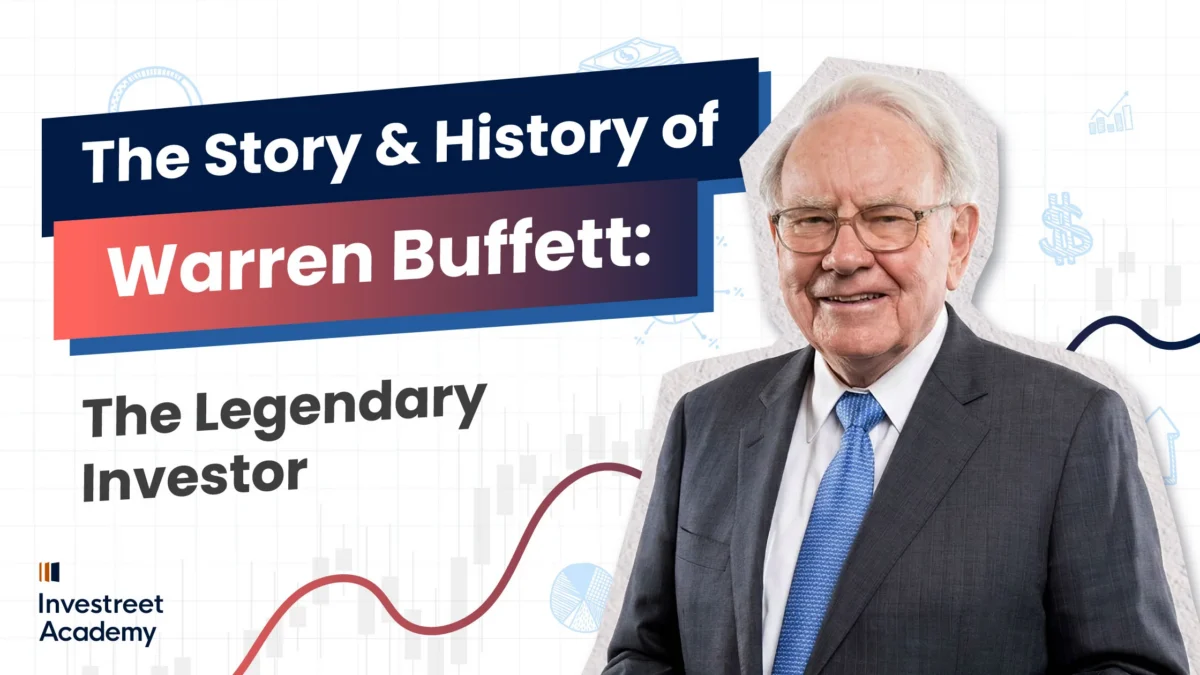
Have you ever wondered who is Warren Buffett? His journey began long before he became a financial legend. He started as a curious child fascinated by numbers, money, and simple business ideas. Over time, that curiosity evolved into one of the most remarkable investing careers in history, leading him to turn Berkshire Hathaway into a global powerhouse.
Through this article, you will explore key stages of his journey, his early life, Berkshire Hathaway’s success story, his investing strategy, personality, key achievements, philanthropy and the legacy he has built over decades.
How was Warren Buffett’s early life?
Before becoming the Oracle of Omaha, Warren Buffett was a boy who showed an early interest in numbers and business. Born in 1930 in Omaha, Nebraska, he grew up during the hardships of the Great Depression. He was the second of three children. Warren Buffett has one older sister, Doris Buffett, and one younger sister, Janet Buffett. His father, Howard Buffett, was a stockbroker who later became a US congressman, while his mother, Leila Buffett, played a key role in maintaining a supportive and stable household.
Speaking of early education, Warren Buffett attended school in Omaha and later in Washington, DC, after his father entered Congress. He stood out in his studies, particularly in math, showing a strong talent for numbers. However, his curiosity extended beyond the classroom. At a young age he read (One Thousand Ways to Make $1000), which sparked his interest in money and business. While most students focused on school subjects, Buffett became increasingly drawn to financial books and the study of markets.
Business and reinvestment was in Warrant’s genes since he was a little boy, he started early at 6 years old selling chewing gum and Coca Cola door to door, later reselling golf balls, delivering newspapers and as a teenager he bought a used pinball machine, placed it in a barbershop and turned it into a small money-making business by sharing the profits and reinvesting to grow.
At just 11 years old, Warren Buffett made his first stock investment, buying shares of Cities Service at around $38 each. He watched them fall to about $27 before eventually recovering, leading him to sell at a small profit of around $40. However, the stock later soared to over $200, teaching him a lifelong lesson about patience and the cost of selling strong investments too soon.
Later on, Warren Buffett pursued higher education with a clear focus on business. He began his studies at the University of Pennsylvania before transferring to the University of Nebraska–Lincoln, where he completed his bachelor’s degree in business. After graduating, he applied to the Harvard Business School but was not accepted. Although he was disappointed at first, but it turned out to be a blessing, as it led him to the Columbia Business where Benjamin Graham was his professor and mentor. This experience helped shape his resilience and independent thinking, qualities that later defined his investment approach.
Additional Information:
Benjamin Graham, often referred to as the “father of value investing,” significantly influenced Warren Buffett’s investment philosophy. Graham’s principles of value investing, which emphasize investing in undervalued companies with strong fundamentals, became the foundation of Buffett’s approach to investing. This experience helped shape Buffett’s resilience and independent thinking, qualities that later defined his successful investment strategy.
This foundation of curiosity, discipline and value-driven thinking eventually led Buffett toward a decision that would reshape both his life and Berkshire Hathaway itself. Let’s explore one of the most remarkable stories in investing history.
How a failing textile company became Warren Buffett’s greatest investment?
It all started with no intention of building a big empire or even managing a business. Warren Buffett back then was just a young investor seeking opportunities that others might ignore more like a bargain hunter for undervalued companies being sold for less than their true value. He had adopted his mentor Benjamin Graham’s approach which focused on buying something for less than it’s worth (intrinsic value) and waiting patiently for the market to recognize its real value. This mindset was far beyond what most investors were thinking at the time; while they focused on chasing short-term gains, Buffett looked for hidden value.
A hidden opportunity emerges
Also, no matter how underperforming or overlooked a business might be, it could still seem like a good catch for Warren Buffett under his strategy. This led to his encounter with the struggling textile company Berkshire Hathaway, which would later evolve into something far beyond what anyone could have imagined. At the time, however, the company’s performance was declining and it was barely surviving, which made it unattractive to most investors. For Buffett, though, it looked like a classic undervalued opportunity, and at the time a long-term takeover of the business was not his intention.
A broken deal sparked an unexpected shift
What seemed like a coincidence ultimately shifted the plan. A conflict with management over a share buyback price became a turning point in Warren Buffett’s career. Buffett had agreed to sell his shares in Berkshire, but management later offered a slightly lower price than initially promised, breaking their agreement. This left Buffett frustrated. However, instead of giving up and selling the shares, he made an unexpected move. He started buying even more shares. What was meant to be a small investment gradually evolved into taking control of the company.
Letting go of a failing industry
Once Buffett took over, he faced a harsh reality: “A bad business remains bad even with good management”. The textile industry was in decline and offered little promise for the company, while competition was intense, making profitability unlikely. So Buffett decided not to waste time trying to fix a failing business and instead reshaped Berkshire into something entirely different, more like an investment entity, aiming to better allocate capital towards better opportunities.
A game-changing acquisition in 1967
In 1967, Warren Buffett’s company made the decision to acquire the insurance company National Indemnity Company, and it proved to be a game changer. This gave him access to the concept of “float,” where insurance companies collect premiums upfront and pay claims later. The float generated a pool of capital that enabled Berkshire to invest in other growth opportunities over time. Over the years, this capital was used to invest in companies such as Coca-Cola, GEICO, and See’s Candies, which became major pillars of Berkshire’s success and financial strength.
The evolution of the investment strategy
Warren Buffett’s strategy evolved over time. He was initially influenced by Benjamin Graham, focusing on buying undervalued stocks with a margin of safety. Over time, and increasingly from the late 1960s onward, through his partnership and growing collaboration with Charlie Munger, he refined his approach to focus more on high-quality businesses with strong long-term advantages. Instead of buying only cheap companies, he began paying fair prices for great businesses and holding them for long-term compounding growth.
From textiles to a diversified investment empire
Although the original textile business faded, that did not lead to the disappearance of Berkshire Hathaway’s name. It survived by being restructured into something greater, operating across diversified sectors such as insurance, energy, railroads, and others. This transformation was driven by Warren Buffett’s smart strategy not only by stepping away from the failing sector, but also by continuously reinvesting profits into a strong portfolio of businesses, creating an efficient growth cycle. That’s what actually made his approach stand out.
Eventually, it was not luck that shaped the success of Berkshire Hathaway into one of the most valuable companies in the world but decades of patience, disciplined decision-making, smart reinvestment and capital allocation. What began as a simple search for another bargain deal became one of the most successful business stories, building a legacy of long-term compounding wealth.
After exploring how Berkshire Hathaway became a global success, let’s look deeper into the personality of Warren Buffett.
How was Warren Buffett Personality?
Warren Buffett’s personality does not only define who he is but also plays a key role in shaping his investment philosophy and business strategy over time.
- Simple and humble: despite being one of the richest people in the world, he lives in a modest way, he enjoys simple routines and avoids unnecessary luxury. This reflects his belief that wealth should not change a person’s core habits.
- High integrity: he is known for his honesty and clarity. He speaks in a straightforward way, avoids overcomplicating ideas and values transparency in business.
- Independent thinker: rather than following random predictions, hypes, market trends and the mainstream opinions of the crowd. He relies on his own informed analysis and his deep understanding of the business and the circumstances.
- Good emotional control: Buffett stays patient and emotionally composed especially during big uncertainties and when markets booms or crashes, so instead of making impulsive decisions, he remains cautious and waits for the right opportunities to act.
- Strong learner: Buffett is a lifelong reader who reportedly spends about 5–6 hours a day reading books, newspapers, and annual financial reports. He believes better decisions stem from better understanding, not guesswork, and consistently seeks knowledge to improve his judgement.
- Forward thinking: Warren Buffett had a long-term mindset; he focused on a business’s future value rather than short-term market movements or quick profits. He aimed to hold investments for many years so his returns could compound.
With his personality in mind, let’s look at Warren Buffett’s investing strategy in more detail. This strategy became the foundation of his success in investing and business.
What was Warren Buffett’s investing strategy?
At first glance, Warren Buffett’s investing strategy may seem simple, but the real challenge is having the patience and discipline to stick with it, something most investors struggle with.
While many investors chase trends, expect quick results, and lose patience before the power of compounding can take effect, Buffett took a very different approach.
So, let’s take a look at the strategy that helped him become one of the greatest investors in history.
Buy businesses, not just stocks
Warren Buffett looks at stocks as real companies he could own, not just trading assets. He thinks like a business owner, focusing on how the company actually performs rather than short-term price movements.
Invest only in what you understand
If a business is too complicated, he simply avoids it. There’s no need to follow the crowd if you don’t have a solid prediction of how the business may perform.
Focus on long-term value, not short-term price moves
He cares more about what a company will be worth over decades than today’s price movements.
Look for strong, reliable companies
He prefers businesses with steady earnings, a good reputation and a clear advantage over competitors.
Have a margin of safety
Buy at a low or fair price. Even great companies are only worth buying if the price makes sense. Otherwise, buying at a high price can turn a good company into a bad investment.
Allow compounding to work in your favour
Warren Buffett believes time is one of the most powerful forces in investing, when you stay patient and leave your money to grow, your profits start earning their own profits.
Maintain emotional control
Stay patient, avoid chasing trends and don’t take an impulsive decision as a quick reaction to market noise, panic from news or crowd behaviour.
“Invest only in what you understand” is a key principle in Buffett’s strategy, which explains how he approached the tech boom through his circle of competence.
How did Warren Buffett approach the tech boom?
Warren Buffett approaches the tech boom through his “circle of competence,” investing only in businesses he fully understands. During the 1990s and early 2000s, while many investors rushed to buy technology stocks such as Microsoft, Amazon, and Google, Buffett chose not to follow the crowd. He stayed away because he believed tech companies change too quickly and are difficult to value over the long term. He focused instead on simple, stable businesses with predictable earnings.
His approach made sense during the early 2000s, when the dot-com bubble burst and many investors who had followed the hype suffered major losses. While others rushed into tech stocks and later fled during the crash, Buffett avoided the speculation, strengthening his reputation for disciplined, long-term investing. But surprisingly, he later entered the tech space, but only in companies like Apple that showed strong, consistent cash flows and fit his view of a reliable long-term business.
Warren Buffett’s investing strategy delivered remarkable long-term success in both investing and business. This is how he became widely known as the “Oracle of Omaha.”
Why was Buffett called the Oracle of Omaha?
By the early 1980s, Warren Buffett was widely known as the “Oracle of Omaha”. The nickname spread mainly through business media and financial press coverage.
“Oracle” is a metaphor for his exceptional financial judgment and highly successful long-term investment decisions, while “Omaha” refers to his hometown, where he began building his investment career.
The nickname became even stronger because his investment results were highly consistent over time, leading many people to view him as someone whose decisions were often proven right in the long run. This was not just about intelligence, but also his patience and long-term thinking which made his approach very effective.
He also chose to remain in Omaha rather than move to major financial centres such as New York, which made him stand out even more and strengthened the “Omaha” part of his nickname.
To this day, Warren Buffett continues to live in the same house in Omaha, Nebraska that he bought in 1958, and he has never moved to another city despite becoming one of the richest people in the world.
After knowing why Warren Buffett was famously named the “Oracle of Omaha,” let’s look at some of Warren Buffett’s most famous quotes.
What are some famous quotes by Warren Buffett?
If we look at Warren Buffett’s most famous quotes, we can clearly see how closely they align with his investment and business strategy. They reflect the principles behind his long-term success.
- “Price is what you pay. Value is what you get.”
(The focus should be on what something is truly worth, not just its cost
- “Be fearful when others are greedy and greedy when others are fearful.”
The best opportunities come when you go against the crowd, buy at a low price when others are selling out of fear, and be cautious when everyone is overly confident.
- “The stock market is designed to transfer money from the Active to the Patient.”
People who trade too often, and act quickly usually lose money, while those who stay patient and hold their investments over time are more likely to gain.
- “Risk comes from not knowing what you’re doing.”
Lack of knowledge is the biggest source of investing mistakes.
- “It’s far better to buy a wonderful company at a fair price than a fair company at a wonderful price.”
Quality matters more than low price, it’s better to invest in a high-quality company even if it’s not very cheap, rather than buying a weak company just because it looks like a great deal.
- Only buy something that you’d be perfectly happy to hold if the market shut down for 10 years.”
Only invest in things you truly believe in, so you would feel comfortable holding them for a long time without needing to sell, this reflects a long-term thinking mindset
- “Someone is sitting in the shade today because someone planted a tree a long time ago.”
The success we enjoy today comes from actions taken in the past, showing the importance of patience and long-term thinking.
Warren Buffett’s wealth is not just a number; it is the result of patience, discipline, and decades of compounding, making it one of the most remarkable financial journeys in history. Let’s take a closer look.
What is Warren Buffett’s wealth and how did it grow?
One of the most powerful lessons from Warren Buffett’s wealth is how it grew over time. Most of his fortune was built after the age of 50, showing that true wealth is not created quickly but through patience, discipline and long-term compounding.
His wealth stems from value investing, buying strong companies at fair or undervalued prices. He avoids speculation and focuses on businesses with strong fundamentals and long-term potential.
Net worth and global ranking:
Warren Buffett has an estimated net worth of around $140–$150 billion, consistently ranking him among the world’s top 10 richest people. His wealth fluctuates daily with the market value of Berkshire Hathaway shares, which make up most of his fortune.
The source of wealth:
His wealth is largely tied to his ownership stake in Berkshire Hathaway, which holds a concentrated portfolio of high-quality public companies such as Apple, Coca-Cola, American Express, Bank of America and Chevron.
Alongside these investments, Berkshire fully owns major operating businesses including GEICO, BNSF Railway, and Berkshire Hathaway Energy, which generate steady cash flows. These earnings combined with insurance float are continuously reinvested, creating a long-term compounding engine that has driven Buffett’s financial success.
Living modestly despite billions:
As we mentioned earlier, despite his wealth, Buffett still lives in the same modest home he bought in Omaha decades ago. His simple lifestyle underscores that his success stems from investment discipline rather than luxury spending.
Beyond his wealth, Warren Buffett also played a major role in philanthropy, becoming one of the largest and most influential philanthropists in modern history.
What was Warren Buffett’s role in philanthropy?
Building an enormous wealth empire did not diminish Buffett’s commitment to philanthropy. He believes that a significant part of this wealth should eventually benefit society, and this belief has made his contributions among the largest charitable commitments in history.
The major turning point in Buffett’s philanthropic journey came in 2006, when he announced that he would donate the majority of his fortune to charity. At that moment, he shifted from a wealth accumulator to a large-scale philanthropist. A large part of this commitment was directed to the Bill & Melinda Gates Foundation, along with other family foundations.
Another major move came in 2010, when Buffett co-founded The Giving Pledge with Bill Gates and Melinda French Gates. This was a unique initiative that encouraged many billionaires worldwide to commit a considerable share of their wealth to charity.
Since then, his donations have been consistent and ongoing. A large portion of his Berkshire Hathaway shares has been given to charitable foundations, bringing his total donations to tens of billions of dollars.
Today, Warren Buffett is not only known for his investment success and wealth but also for his generosity to society. Since 2006, his donations have exceeded $60 billion, making him one of the largest philanthropists in history.
After decades of dedication as a CEO, Buffett had made it clear many times that he would eventually step down making his decision expected rather than a surprise.
How did the market react to Buffett stepping down as CEO?
In 2025, Warren Buffett announced he would step down as CEO of Berkshire Hathaway, ending his long tenure at the helm. The transition took effect in January 2026, when Greg Abel officially became CEO and assumed day-to-day leadership. Greg Abel also acknowledged that Buffett had personally chosen him as his successor years earlier, while Buffett remained chairman of the company.
The announcement had a short-term impact on the market, with Berkshire Hathaway shares slipping slightly as investors reacted to the leadership change. However, the effect was limited, as the transition to Greg Abel had been planned in advance and Buffett remained as chairman, which calmed investors.
Now as this article nearly comes to an end, let’s summarize the key factors behind Warren Buffett’s financial success.
5 key factors behind Warren Buffett’s financial success?
- Early entrepreneurial mindset: from a young age, Buffett was already thinking like a businessman. He sold small items like newspapers and gum and even ran simple ventures like pinball machines. These early experiences taught him how to earn, save, and reinvest money.
- Early investment success: before becoming wealthy, Buffett ran investment partnerships in the 1950s–60s, pooling money from family and friends and investing it in undervalued opportunities to achieve good returns.
- Mentorship and value investing: Buffett was heavily influenced by Benjamin Graham, who taught him value investing, buying businesses at low prices with a margin of safety, a principle that became the foundation of his investing philosophy.
- Berkshire Hathaway transformation: Buffett took control of Berkshire Hathaway in the 1960s and transformed it from a struggling textile company into a massive investment conglomerate that owns many major businesses
- Long-term discipline and compounding: Buffett’s success didn’t come from quick wins, but from decades of patience, consistency, and disciplined investing. He allowed compounding to work overtime, which became one of the strongest drivers of his wealth.
Key Milestones in Warren Buffett’s Life
| Age | Year | Experience/Action |
| 6 | 1936 | Sold chewing gum and Coca-Cola door-to-door; resold golf balls; delivered newspapers. |
| 11 | 1941 | Made his first stock investment by buying shares of Cities Service at around $38 each, sold for a small profit after observing the stock’s fluctuations. |
| 15 | 1945 | Bought his first used pinball machine for $25 with a friend and placed it in a barbershop, starting a pinball machine business. |
| 16 | 1946 | Expanded his pinball machine business to operate multiple machines, gaining valuable entrepreneurial experience. |
| 17 | 1947 | Sold his pinball machine business for $1,200, having accumulated significant experience and profits from the venture. Enrolled at the Wharton School of the University of Pennsylvania, studying for two years. |
| 19 | 1949 | Transferred to the University of Nebraska–Lincoln due to dissatisfaction with the theoretical approach of professors. |
| 21 | 1951 | Graduated with a bachelor’s degree in business. Attended Columbia Business School, studying under Benjamin Graham and focusing on investment strategies. |
| 24 | 1954 | Started his first investment partnership, Buffett Partnership Ltd., raising about $100,000 from family and friends, focusing on value investing and achieving significant returns. |
| 26 | 1956 | Established a second investment partnership, continuing to apply value investing strategies. |
| 27 | 1957 | Began investing in GEICO, which became a significant success in his investment portfolio. |
| 32 | 1962 | Started purchasing shares of Berkshire Hathaway, initially as a value investment. |
| 35 | 1965 | Took control of Berkshire Hathaway. |
| 37 | 1967 | Acquired National Indemnity Company, gaining access to the concept of “float” for investment opportunities. |
| 40 | 1970 | Realized the textile industry was declining; decided to reshape Berkshire into an investment entity rather than trying to fix a failing business. |
| 54 | 1984 | Gained widespread media attention and was dubbed the “Oracle of Omaha” due to his successful investment strategies and clear communication style. |
| 56 | 1986 | Became a billionaire for the first time, recognized by Forbes magazine, marking a significant milestone in his investment career and increasing his public profile as the “Oracle of Omaha.” |
| 78 | 2008 | Featured in the documentary “The Secret Millionaire,” where he discussed philanthropy and the importance of giving back to the community, reinforcing his image as a socially responsible billionaire. |
| 90 | 2020 | Continued to lead Berkshire Hathaway as chairman and CEO. |
| 95 | 2025 | Announced his decision to step down as CEO of Berkshire Hathaway, marking the end of his long leadership. |
| 96 | 2026 | Transition took effect in January, with Greg Abel officially becoming CEO, taking over day-to-day leadership. Greg Abel acknowledged that Buffett had personally chosen him as his successor years earlier, while Buffett remained as chairman of the company. |
After reviewing one of the most remarkable investment stories, we can say that Warren Buffett’s success is measured not only by wealth but also by the philosophy he built over decades. His discipline, patience, and independent thinking set him apart in a fast-moving world. Despite his immense fortune, he remained humble and committed to giving back much of his wealth to society. His journey remains a timeless lesson in long-term investment success.